






Washington Signals New Air‑Power Posture as Tehran Escalates Rhetoric
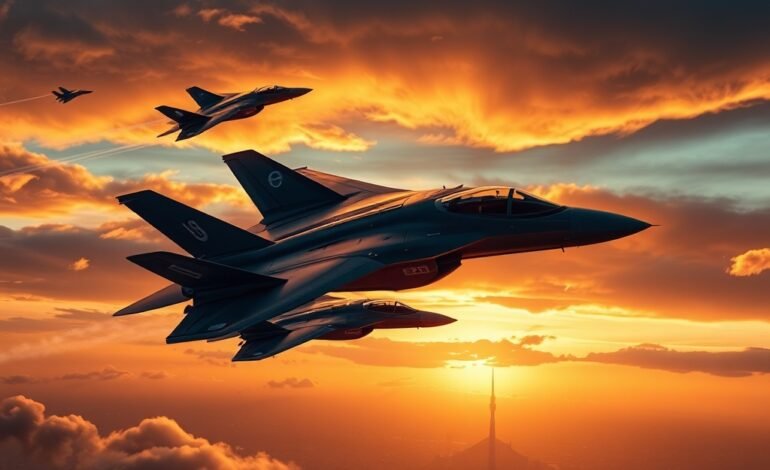

– Reuters
Strategic Show of Force
The U.S. Air Force component of CENTCOM disclosed that a multi‑day combat‑air exercise will be conducted across the Middle East. Officials described the drill as a demonstration of “the ability to deploy, disperse, and sustain combat airpower across the Middle East.”[1] The exercise will involve fighter squadrons, strategic bombers, aerial‑refueling tankers and ISR platforms, coordinated with allied air forces.
Although precise dates and locations remain classified, the operation is expected to span several days and may use forward‑deployed bases in Qatar, the United Arab Emirates, and possibly Turkey, while integrating sorties from the carrier air wing of the nuclear‑powered strike group centered on the USS Abraham Lincoln.
Context: A Growing Rift with Tehran
Iran’s nuclear enrichment activities have accelerated over the past six months, with Tehran moving toward breaching the 20‑percent enrichment ceiling of the JCPOA. In response, the United States imposed a new round of sanctions targeting Iran’s oil exports and ballistic‑missile procurement networks.
Tehran’s rhetoric has grown more hostile, accusing the United States of “aggressive militarism” and warning of “swift retaliation” if American forces encroach on Iranian sovereign territory. The IRGC has conducted missile tests, and Iran‑aligned militias in Iraq and Syria have intensified attacks on U.S. and coalition facilities.
The arrival of the Abraham Lincoln carrier strike group—comprising the carrier, a guided‑missile cruiser, a destroyer and a logistics support vessel—was described by a senior military spokesperson as a “dramatic” enhancement of American firepower in the theater.[2]
Why an Air‑Power Exercise Now?
Analysts identify four primary objectives:
- Deterrence Through Visibility – Publicly rehearsing the full spectrum of air operations signals to Tehran that any hostile move could be met with a swift, coordinated aerial response, while reassuring allies such as Saudi Arabia, Israel and the UAE.
- Testing Interoperability – The drill offers a rare chance for U.S. forces to operate with partner air forces that have recently upgraded fleets (e.g., Qatar’s Rafale jets, UAE’s F‑35s), ensuring seamless C4ISR integration.
- Logistical Validation – High‑tempo operations across a dispersed theater stress aerial refueling, forward‑deployment of munitions and rapid maintenance cycles, exposing potential bottlenecks before they become liabilities.
- Strategic Messaging to Global Audiences – The demonstration projects American resolve to other great‑power competitors, notably Russia and China, which have deepened ties with Tehran.
Regional Reactions and Potential Counter‑Moves
GCC members have welcomed the initiative. Saudi Arabia’s defense minister praised “the continued partnership that safeguards stability and deters aggression.” Israel’s military spokesperson called the exercise “a reinforcement of the security umbrella that protects our shared interests.”
Iranian officials condemned the move as “unnecessary provocation” and warned that “any attempt to intimidate the Islamic Republic will be met with decisive retaliation.” The IRGC hinted at expanding its own aerial drills, including simulated attacks on U.S. bases, though no concrete plans were disclosed.
European Union envoys mediating a tentative restart of JCPOA talks may view the heightened U.S. posture as leverage to compel Tehran back to negotiations, while critics caution that overt displays of force could harden Iran’s stance.
Operational Details: What Might the Drill Involve?
Based on historical precedent, the multi‑day exercise could feature:
- Air‑to‑Air Combat Simulations – Mock dogfights to refine beyond‑visual‑range engagement tactics.
- Strike Missions – Bomber crews practice low‑level ingress and precision‑guided munition delivery against “high‑value” targets on de‑conflicted ranges.
- ISR Operations – UAVs and manned platforms gather synthetic‑target data, testing real‑time data fusion.
- Aerial Refueling Drills – KC‑135 and KC‑46 tankers execute high‑tempo refueling sorties.
- Joint Command Exercises – Integration of air, land and sea components, including carrier‑based aircraft from the Abraham Lincoln strike group.
Broader Implications for U.S. Military Strategy
The exercise reflects a shift toward “distributed lethality,” relying on mobile platforms—aircraft carriers, expeditionary airfields and forward‑deployed squadrons—to create a flexible, survivable deterrent. It also aligns with the Pentagon’s “Air‑Sea Battle” concept, which envisions integrated operations to counter Iran’s anti‑access/area‑denial (A2/AD) capabilities.
Looking Ahead
Intelligence agencies in Washington, Tehran and allied capitals will monitor the drill closely. Its success—or any mishap—could shape the strategic calculus for the next six months, influencing diplomatic overtures, further sanctions or limited kinetic actions.
For regional partners, the exercise offers reassurance that the United States retains the capability and willingness to project power swiftly. For Tehran, it serves as a stark reminder that any escalation could be met with a coordinated, multi‑theater response.
As the Middle East remains a crucible of geopolitical competition, the United States’ decision to publicly rehearse its air‑power reach underscores a timeless principle of deterrence: visibility of capability can be as potent as its actual use.
