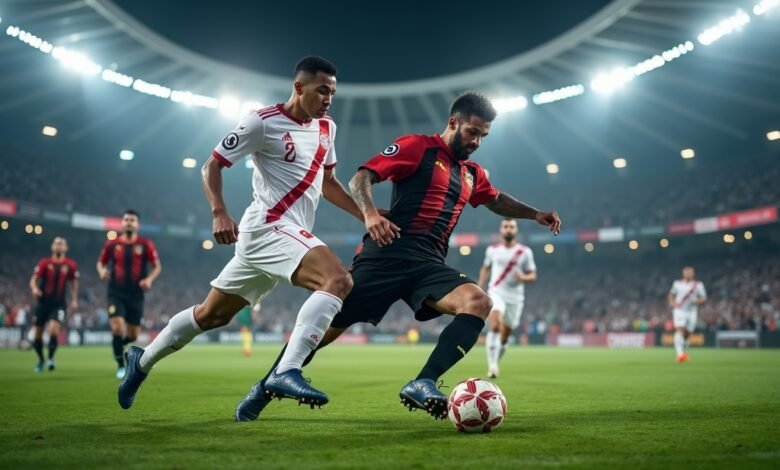
The Saudi Professional League currently leads in financial investment and international player quality, while the Arabian Gulf League maintains stronger competitive balance and youth development. This Gulf football rivalry has intensified as both leagues pursue different strategies to dominate regional football. We analyze league structure, finances, player quality, competitiveness, fan experience, and current form to determine which league holds the advantage in 2026.
League Structure and Organization
The UAEFA and Saudi Football Federation operate with different administrative approaches, impacting league organization and efficiency. The Arabian Gulf League features 14 teams with a traditional home-and-away format. The Saudi Professional League expanded to 18 teams in 2023, creating a more demanding schedule. Both leagues face similar challenges in matchday organization but differ significantly in governance structures.
Governance and Administration
The UAEFA operates under direct supervision from the UAE National Olympic Committee, with centralized decision-making processes. The Arabian Gulf League benefits from consistent administrative frameworks across all clubs. The Saudi Football Federation maintains greater autonomy, allowing for more rapid implementation of new initiatives. This structural difference affects how quickly both leagues can adapt to changing football landscapes and international standards.
Competition Format and Structure
Both leagues follow similar formats with home-and-away fixtures, but key differences exist in their competition structures:
- The Arabian Gulf League consists of 14 teams playing 26 matches each
- The Saudi Professional League expanded to 18 teams playing 34 matches each
- UAE integrates the President’s Cup throughout the season
- Saudi Arabia runs a separate cup competition after league matches
- Both leagues utilize VAR technology for match officiating
Financial Investment and Club Finances
The Saudi Professional League currently leads in financial investment with clubs spending approximately $500 million on transfers in 2025 alone. The Arabian Gulf League operates with a more conservative approach, with total transfer spending around $150 million. This financial disparity impacts player acquisition, stadium development, and overall league competitiveness.
Club Ownership and Investment Models
Saudi clubs benefit from sovereign wealth fund ownership, with Public Investment Company backing for major teams. This enables massive spending on marquee players and infrastructure. UAE clubs maintain a more diverse ownership structure, including traditional family ownership and government-backed entities. The investment models reflect different approaches to sustainable growth versus immediate competitive success.
Broadcasting and Commercial Revenue
The Saudi Professional League secured a $400 million broadcasting deal for 2023-2026, significantly higher than the Arabian Gulf League’s $180 million agreement. Commercial sponsorship follows similar patterns, with Saudi clubs securing premium partnerships. Revenue distribution models differ, with Saudi clubs retaining a higher percentage of broadcasting income, while the Arabian Gulf League maintains more equitable distribution among all member clubs.
Player Quality and Recruitment Strategy
The Saudi Professional League has attracted more internationally renowned players, with Cristiano Ronaldo’s 2023 transfer marking a watershed moment. The Arabian Gulf League focuses on strategic signings that enhance team cohesion rather than global star power. Both leagues face challenges balancing local talent development with international recruitment strategies.
Marquee Signings and International Players
Saudi clubs have secured several high-profile international players, including Karim Benzema, N’Golo Kanté, and Sadio Mané. These signings have raised the league’s global profile. UAE clubs have pursued different strategies, targeting established European players in their prime rather than aging superstars. The Saudi league currently boasts 15 players from UEFA Champions League-winning clubs, compared to UAE’s 8 such players.
Youth Development and Local Talent Production
The Arabian Gulf League maintains stronger youth development programs, with UAEFA investing heavily in academy infrastructure. Clubs like Al Ain and Shabab Al Ahli have produced numerous national team players. The Saudi Professional League has recently accelerated youth development initiatives, but results remain mixed. Both leagues face challenges retaining top local talent, with many players moving to European leagues after establishing themselves domestically.
Competitive Balance and Performance
The Arabian Gulf League demonstrates greater competitive balance, with 5 different champions in the past decade. The Saudi Professional League has seen Al Hilal dominate with 4 titles in the last 5 seasons. This competitive parity impacts viewer interest and sponsorship opportunities differently across both leagues.
Title Races and Competitive Balance
Competitive metrics reveal significant differences between the leagues:
- Arabian Gulf League: 5 different champions since 2016
- Saudi Professional League: 3 different champions since 2016
- UAE: Title decided by average of 6.5 points margin
- Saudi Arabia: Title decided by average of 12.3 points margin
The tighter competition in the Arabian Gulf League creates more unpredictable match outcomes and sustained fan engagement throughout the season.
Continental Competition Performance
In AFC Champions League competition, Saudi clubs have reached the final twice in the past three seasons, with Al Hilal winning in 2021. UAE clubs have reached the semi-finals three times but have not secured the title since 2009. This continental performance reflects the different developmental priorities and resource allocation strategies between the two leagues.
Fan Experience and Stadium Infrastructure
Saudi Arabia has invested heavily in modern stadium infrastructure, with several venues exceeding 50,000 capacity. The UAE maintains well-established facilities but with fewer recent major developments. Fan engagement initiatives differ significantly, with Saudi Arabia focusing on entertainment value while UAE emphasizes traditional matchday experiences.
Stadium Infrastructure and Facilities
Saudi Arabia has completed state-of-the-art stadium projects, including the 62,000-seat King Abdullah Sports City and the 45,000-seat Mrsool Park. The UAE features established venues like the 49,000-seat Mohammed Bin Zayed Stadium and the 43,000-seat Al Nahyan Stadium. Both leagues have implemented modern technology, but Saudi venues generally offer more advanced fan amenities and entertainment options.
Fan Culture and Matchday Atmosphere
Arabian Gulf League matches average 8,500 spectators per game, with higher attendance for derbies and top-tier matchups. Saudi Professional League matches draw approximately 12,000 fans on average. Fan culture differs significantly, with UAE supporters maintaining traditional matchday rituals while Saudi Arabia has introduced entertainment elements like halftime shows and fan zones to enhance the experience.
2026 Season Analysis and Current Standings
The 2026 season reveals contrasting league dynamics, with Saudi clubs dominating financially while UAE teams maintain competitive balance. Both leagues have shown improved performance in continental competitions, reflecting their different development approaches.
2026 Arabian Gulf League Standings and Form
| Position | Club | Won | Drawn | Lost | Goals | Points | |
|---|---|---|---|---|---|---|---|
| 1 | Al Ain | 18 | 12 | 4 | 2 | 35-18 | 40 |
| 2 | Shabab Al Ahli | 18 | 11 | 5 | 2 | 38-15 | 38 |
| 3 | Al Wahda | 18 | 10 | 5 | 3 | 32-19 | 35 |
| 4 | Al Jazira | 18 | 9 | 6 | 3 | 30-20 | 33 |
| 5 | Baniyas | 18 | 9 | 4 | 5 | 28-22 | 31 |
2026 Saudi Professional League Standings and Form
| Position | Club | Played | Won | Drawn | Lost | Goals | Points |
|---|---|---|---|---|---|---|---|
| 1 | Al Hilal | 22 | 16 | 4 | 2 | 52-18 | 52 |
| 2 | Al Nassr | 22 | 15 | 5 | 2 | 48-22 | 50 |
| 3 | Al Ahli | 22 | 13 | 6 | 3 | 45-24 | 45 |
| 4 | Al Shabab | 22 | 12 | 7 | 3 | 41-25 | 43 |
| 5 | Al Taawoun | 22 | 11 | 8 | 3 | 38-26 | 41 |
Expert Analysis and Future Trajectory
Football experts recognize both leagues’ strengths while noting different developmental priorities. The Saudi Professional League aims to become a global football destination, while the Arabian Gulf League focuses on sustainable growth and competitive balance. These differing approaches will shape their future trajectories in regional and international football.
Expert Opinions on League Quality
AFC technical director praised the Saudi league’s “ambitious vision” but noted concerns about financial sustainability. UAEFA president emphasized the importance of “balanced development” in the Arabian Gulf League. European scouts acknowledge Saudi Arabia’s ability to attract elite talent while praising UAE’s “consistent production of technically skilled players.” These expert views reflect the different strategic approaches both leagues have adopted.
Future Development Plans and Trajectories
The Saudi Professional League plans further expansion to 20 teams by 2028, with continued investment in marquee signings. The Arabian Gulf League focuses on improving youth development infrastructure and enhancing matchday experiences. Both leagues aim to increase continental competition performance, but through different strategies. The Saudi league prioritizes immediate success, while UAE emphasizes long-term development of local talent.
Frequently Asked Questions
Which league has better players in 2026?
The Saudi Professional League currently boasts more internationally renowned players, with several UEFA Champions League winners and Ballon d’Or contenders. However, the Arabian Gulf League maintains a stronger balance of quality across all teams, with fewer significant gaps between top and bottom clubs.
How do UAE and Saudi league finances compare?
The Saudi Professional League significantly outspends the Arabian Gulf League, with transfer investments approximately three times higher. Broadcasting rights and commercial partnerships also generate substantially more revenue for Saudi clubs. However, the UAE league maintains more equitable financial distribution among member clubs.
Which league performs better in AFC competitions?
Saudi clubs have reached the AFC Champions League final twice in the past three seasons, winning once. UAE teams have consistently reached the semi-finals but have not secured the title since 2009. Saudi Arabia’s financial advantage translates to stronger continental performance, though UAE teams demonstrate greater competitive balance domestically.
How do fan experiences differ between the two leagues?
Saudi Arabia offers more modern stadium facilities with advanced amenities and entertainment elements. The UAE maintains traditional matchday experiences with strong fan culture. Saudi matches draw higher average attendance, but UAE derbies generate intense atmospheres with passionate local support.
Which league has better youth development programs?
The Arabian Gulf League maintains more established youth development infrastructure, with UAEFA investing consistently in academy systems. UAE clubs have produced more national team players and maintain better pathways for local talent. Saudi Arabia has accelerated youth development recently but still lags in consistent production of homegrown stars.
Final Whistle
The Saudi Professional League currently leads in financial investment and international player quality, while the Arabian Gulf League maintains stronger competitive balance and youth development. Both leagues pursue different strategies to enhance their standing in regional and international football. The UAE league focuses on sustainable growth and balanced development, while Saudi Arabia prioritizes immediate success through significant financial investment. As both leagues continue to evolve, their contrasting approaches will provide interesting case studies in football development strategies. For comprehensive coverage of UAE sports, match reports, and league analysis, stay connected with Shuraa News.