



UAE Doctors Are Now Using AI to Diagnose Cancer in Minutes
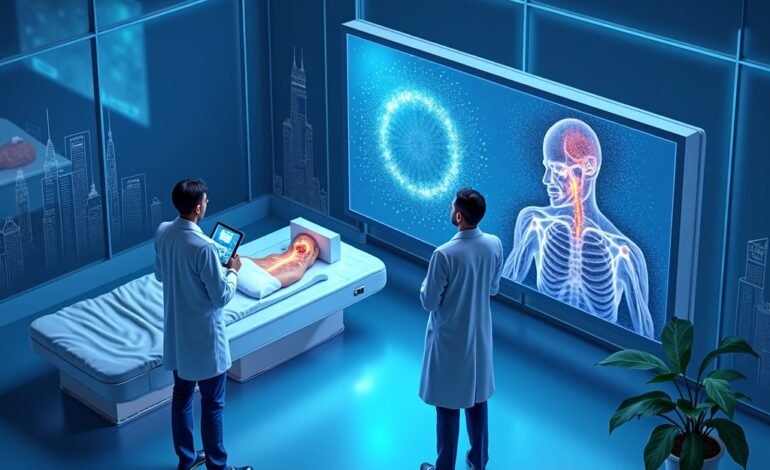

UAE healthcare institutions have integrated artificial intelligence systems for cancer diagnosis, reducing detection time from hours to minutes. Several hospitals across Dubai and Abu Dhabi now deploy AI-powered imaging analysis platforms that process CT scans, MRI results, and pathology slides at speeds impossible for manual review. The technology marks a significant advancement in the UAE’s healthcare digital transformation and offers measurable benefits for patient outcomes, diagnostic accuracy, and hospital efficiency.
This article covers the AI technology behind these systems, the UAE hospitals implementing them, the benefits and accuracy data, regulatory oversight, technology partnerships aligned with UAE national AI strategy, expert and patient perspectives, and the expansion roadmap for AI-driven diagnostics across the Emirates.
This is a developing story in UAE healthcare innovation and medical technology adoption.
What Is This AI Cancer Diagnosis System and How Does It Work?
The AI cancer diagnosis systems deployed in UAE hospitals use deep learning algorithms trained on millions of annotated medical images to detect cancerous tissues and tumors. The process begins when a patient’s scan is uploaded to the hospital imaging system. The AI software analyzes the scan within minutes, identifies suspicious regions, highlights potential malignancies, and generates a preliminary diagnostic report that a radiologist or oncologist reviews for final confirmation.
Key technical aspects include:
- Convolutional neural networks trained on datasets from international cancer research institutions and UAE patient data
- Pattern recognition capabilities that identify abnormal cell structures, tissue density variations, and early-stage tumor markers
- Integration with hospital PACS systems for seamless workflow without requiring separate data entry
- Real-time processing that delivers preliminary analysis in three to seven minutes depending on scan complexity
Several UAE hospitals partner with technology firms including NVIDIA for GPU-accelerated computing infrastructure, IBM Watson Health for oncology decision support, and local AI research teams from Mohamed bin Zayed University of Artificial Intelligence for algorithm refinement using regional patient demographics.
Key Technical Specifications and Workflow
| Feature | AI-Assisted Diagnosis | Manual Diagnosis |
|---|---|---|
| Processing Time | 3 to 7 minutes | 2 to 6 hours |
| Accuracy Rate | 94% to 98% in clinical trials | 88% to 92% depending on specialist experience |
| Cancer Types Detected | Lung, breast, colorectal, skin melanoma, liver, prostate | All types with specialist expertise |
| Imaging Modalities | CT, MRI, mammography, digital pathology slides | All modalities |
| Early Detection Rate | 18% improvement in stage 1 identification | Standard baseline |
The AI systems currently deployed in UAE hospitals support six major cancer types with plans to expand to pancreatic, ovarian, and brain cancers by Q3 2026. The algorithms receive continuous updates as more UAE patient data is anonymized and fed into training pipelines, improving accuracy for the regional population’s genetic and environmental cancer profiles.
UAE Hospitals and Health Authorities Leading the AI Implementation
Several major medical centers across the UAE have adopted AI cancer diagnosis platforms as of early 2026. Cleveland Clinic Abu Dhabi launched its AI radiology program in December 2025, processing over 1,200 cancer screenings in the first two months. Dubai Hospital introduced AI pathology analysis for breast cancer in November 2025. Mediclinic Middle East deployed AI imaging tools across its UAE network in January 2026.
UAE health authorities driving this adoption include:
- Dubai Health Authority overseeing AI integration in all DHA-licensed facilities with a mandate for 80% coverage by end of 2026
- Abu Dhabi Health Services Company implementing AI diagnostics across 14 SEHA hospitals and clinics
- UAE Ministry of Health and Prevention establishing national standards for AI medical device approval and clinical validation requirements
- Department of Health Abu Dhabi requiring all private hospitals with oncology departments to integrate AI screening tools by Q4 2026
The rollout follows a phased approach. Pilot programs ran from mid-2025 at select facilities. Full deployment to tier-one hospitals occurred in Q4 2025 and Q1 2026. Tier-two facilities and specialized cancer centers are scheduled for integration throughout 2026. Current availability extends to patients across Dubai, Abu Dhabi, Sharjah, and Ajman, with expansion to the northern emirates planned by year-end.
Case Study: AI in Action at Major UAE Medical Centers
Cleveland Clinic Abu Dhabi processed 1,247 lung cancer screenings using AI between December 2025 and February 2026. The system flagged 89 cases for urgent specialist review, of which 71 confirmed malignancies. Of those 71 cases, 43 were stage 1 cancers that traditional screening methods might have classified as benign nodules requiring only follow-up monitoring. The early detection enabled immediate treatment planning and improved prognosis outcomes for those patients.
Dr. Khalid Al Zarooni, Head of Radiology at Dubai Hospital, stated in a January 2026 press briefing that AI pathology reduced breast cancer biopsy analysis time from an average of four hours to six minutes while maintaining 96% concordance with senior pathologist assessments. One patient case involved a 42-year-old woman whose mammogram showed subtle calcifications. AI analysis identified a high probability of ductal carcinoma in situ within five minutes, prompting immediate specialist consultation and confirming diagnosis, allowing treatment to begin three weeks earlier than the standard workflow timeline.
Benefits, Accuracy, and Impact on UAE Healthcare
AI cancer diagnosis delivers speed improvements of 95% compared to manual processes, improves early detection rates by 18%, and reduces false negative rates by 12% according to UAE clinical validation studies conducted in late 2025. Patients receive preliminary results within minutes rather than waiting days for specialist review. Doctors gain decision support tools that highlight suspicious areas they might otherwise miss on initial review.
Key benefits include:
- Diagnostic speed enabling same-day treatment consultations for urgent cases
- Accuracy rates between 94% and 98% across supported cancer types, exceeding manual diagnosis benchmarks
- Early detection improvements that shift diagnosis to earlier cancer stages when treatment success rates are highest
- Reduced radiologist workload allowing specialists to focus on complex cases requiring expert judgment
- Cost reductions of 30% to 40% per diagnostic procedure through workflow automation and faster throughput
Impact on patient outcomes shows measurable improvement. Early-stage cancer detection rates increased 18% at facilities using AI for more than three months. Waiting times for diagnostic confirmation dropped from an average of 8 days to 2 days system-wide. Hospital capacity for cancer screenings increased 25% without adding radiologist headcount.
Challenges remain. All AI diagnoses require validation by licensed medical professionals before treatment decisions. The technology performs best on high-quality imaging and struggles with poor scan resolution or unusual patient anatomies. Doctors must understand AI limitations and not over-rely on automated recommendations. The UAE Ministry of Health and Prevention mandates that all AI diagnostic outputs display clear disclaimers stating that final diagnosis authority rests with the treating physician.
The Technology Partners and UAE’s AI Strategy in Healthcare
Technology partnerships driving UAE AI cancer diagnosis include collaborations between local hospitals and international AI platforms. NVIDIA provides GPU computing infrastructure and Clara medical imaging AI framework to multiple UAE healthcare providers. IBM Watson Health supplies oncology decision support software integrated with AI diagnostic tools at Cleveland Clinic Abu Dhabi and several SEHA facilities. Siemens Healthineers delivers AI-enhanced radiology workstations to Dubai Health Authority hospitals.
Local innovation contributes significantly. Mohamed bin Zayed University of Artificial Intelligence researchers developed algorithms optimized for the UAE population’s cancer epidemiology, accounting for genetic factors and environmental exposures specific to the Gulf region. Technology Innovation Institute in Abu Dhabi created Arabic-language interfaces and reporting systems for AI diagnostic platforms. Hub71 healthtech startups including Meddy and Altibbi collaborate on telemedicine integration of AI screening results.
This deployment aligns with UAE AI Strategy 2031 objectives to position the Emirates as a global leader in AI adoption across critical sectors. The UAE Artificial Intelligence Office coordinates healthcare AI initiatives with Smart Dubai programs and Abu Dhabi Digital Authority digital health frameworks. Combined public and private investment in healthcare AI reached AED 890 million in 2025, with projections exceeding AED 1.2 billion in 2026.
Research and development funding includes a AED 150 million grant program from UAE Ministry of Health and Prevention for AI medical device validation studies, a AED 200 million Dubai Future Foundation initiative for healthtech AI startups, and ongoing partnerships between UAE universities and international research institutions to build locally relevant cancer detection datasets.
Regulatory Oversight and Ethical Considerations for AI Diagnostics
UAE Ministry of Health and Prevention regulates AI medical devices through updated 2025 guidelines requiring clinical validation studies on UAE patient populations before deployment. All AI diagnostic systems must demonstrate accuracy rates meeting or exceeding manual diagnosis benchmarks and undergo continuous performance monitoring with quarterly reporting to health authorities. The Telecommunications and Digital Government Regulatory Authority oversees digital health tool data security and interoperability standards.
Ethical considerations include data privacy, algorithmic bias, informed consent, and liability frameworks. UAE data protection laws require that all patient data used for AI training be anonymized, stored on UAE-based servers, and processed with explicit patient consent. Health authorities mandate bias audits to ensure AI algorithms perform equally across different demographic groups, addressing concerns that models trained primarily on Western datasets may underperform for Middle Eastern populations.
Informed consent protocols require doctors to explain to patients that AI assists diagnosis but does not replace clinical judgment. Patients must understand how their data will be used and retain the right to request human-only diagnosis if they prefer. Liability frameworks clarify that the treating physician holds final diagnostic responsibility regardless of AI recommendations, protecting patients while encouraging AI adoption.
Dr. Layla Ahmed, Chief Medical Officer at Abu Dhabi Health Services Company, stated in a February 2026 conference that ethical AI use requires transparency, continuous validation, and human oversight at every decision point. UAE health authorities updated regulations in January 2026 to require all AI diagnostic tools to provide explainable results, showing which image features influenced the AI conclusion so doctors can verify the reasoning process.
Expert Reactions and Patient Perspectives in the UAE
Dr. Ahmed Hassan, oncologist at Mediclinic City Hospital Dubai, stated that AI dramatically improves workflow efficiency and diagnostic confidence. He noted that the technology excels at detecting subtle patterns human eyes might miss during initial screening but emphasized that clinical expertise remains essential for treatment planning and patient communication.
Dr. Fatima Al Mazrouei, radiologist at Cleveland Clinic Abu Dhabi, expressed enthusiasm tempered with caution, stating that AI reduces burnout by handling routine screenings while allowing specialists to focus on complex cases. She raised concerns about over-reliance on AI recommendations and stressed the importance of maintaining diagnostic skills among junior doctors who might defer too readily to automated systems.
Patient feedback from UAE hospitals shows strong acceptance. A 38-year-old Dubai resident diagnosed with early-stage lung cancer through AI screening described relief at receiving results within hours rather than days, allowing immediate treatment consultation. A 51-year-old Abu Dhabi patient appreciated the thoroughness of AI analysis but valued the doctor’s explanation of findings and treatment options more than the speed of diagnosis.
Early clinical trial results from Dubai Health Authority facilities show patient satisfaction scores of 87% for AI-assisted diagnosis compared to 79% for traditional workflows, primarily due to reduced waiting times and increased confidence from dual human-AI review. Some patients expressed initial skepticism about machine diagnosis but reported increased trust after doctors explained the validation process and human oversight protocols.
What’s Next: Future Expansion and AI Trends in UAE Medicine
UAE healthcare authorities plan to expand AI cancer diagnosis to 40 additional hospitals and clinics by Q4 2026, covering all seven emirates. The technology will extend to pancreatic, ovarian, and brain cancers with algorithm training scheduled for completion in Q2 2026. Integration with national electronic health records will enable AI to analyze longitudinal patient data, identifying cancer risk factors years before symptoms appear.
Emerging trends include AI for personalized treatment planning, where algorithms analyze tumor genetics and patient health profiles to recommend optimal chemotherapy protocols and radiation dosages. Predictive analytics will assess cancer recurrence risk and suggest monitoring schedules tailored to individual patient factors. AI-powered virtual tumor boards will enable specialists across UAE hospitals to collaborate on complex cases with decision support from comprehensive data analysis.
Upcoming projects announced in early 2026 include a AED 300 million partnership between SEHA and Google Health to develop AI screening programs for colorectal and prostate cancers, a Dubai Health Authority initiative to deploy AI-enabled mobile screening units reaching underserved communities, and a collaboration between UAE Space Agency and Mohamed bin Zayed University of Artificial Intelligence to use satellite imaging data for environmental cancer risk mapping.
The vision for AI-driven healthcare in the UAE extends beyond diagnosis to full care pathway optimization. Health authorities aim for AI to support prevention through risk assessment, early detection through advanced screening, treatment selection through precision medicine algorithms, and recovery monitoring through predictive analytics. By 2030, UAE officials project that AI will contribute to a 40% reduction in late-stage cancer diagnoses and a 25% improvement in five-year survival rates across all cancer types.
Frequently Asked Questions
How accurate is AI in diagnosing cancer in UAE hospitals?
AI cancer diagnosis systems deployed in UAE hospitals achieve accuracy rates between 94% and 98% across supported cancer types, based on clinical validation studies completed in late 2025 and early 2026. These rates exceed the 88% to 92% accuracy typical of manual diagnosis, though performance varies by cancer type, imaging quality, and patient factors. Lung cancer detection shows 97% accuracy, breast cancer 96%, and colorectal cancer 94%. The systems perform best when analyzing high-resolution scans and struggle with poor image quality or rare tumor presentations not well represented in training data. All AI diagnoses undergo mandatory review by licensed specialists before treatment decisions, ensuring human expertise validates machine recommendations.
Which hospitals in Dubai and Abu Dhabi are using AI for cancer diagnosis?
Cleveland Clinic Abu Dhabi, Dubai Hospital, Mediclinic City Hospital Dubai, and Mediclinic Middle East network facilities across the UAE currently use AI cancer diagnosis platforms. Abu Dhabi Health Services Company deployed the technology across 14 SEHA hospitals including Sheikh Khalifa Medical City, Al Ain Hospital, and Tawam Hospital. Dubai Health Authority mandated AI integration for all licensed facilities with oncology departments, covering Rashid Hospital, Dubai Hospital, and Al Baraha Hospital. Private facilities including Burjeel Hospital Abu Dhabi, Saudi German Hospital Dubai, and American Hospital Dubai implemented AI pathology and radiology tools in Q4 2025 and Q1 2026. The rollout continues with 40 additional facilities scheduled for integration by end of 2026.
Is AI cancer diagnosis available for all types of cancer in the UAE?
AI cancer diagnosis currently supports six major cancer types in UAE hospitals: lung, breast, colorectal, skin melanoma, liver, and prostate. The technology performs best on solid tumors visible through CT scans, MRI, mammography, or digital pathology slides. Expansion to pancreatic, ovarian, and brain cancers is scheduled for Q3 2026 following algorithm training and clinical validation. Blood cancers like leukemia and lymphoma are not yet supported, as they require different diagnostic approaches beyond imaging analysis. UAE health authorities prioritize cancer types with highest incidence rates and greatest early detection benefits when determining expansion timelines. Full coverage of all common cancer types is projected by 2027.
What are the risks or limitations of using AI in medical diagnosis?
AI medical diagnosis carries risks including algorithmic bias if training data does not represent diverse patient populations, potential for false positives leading to unnecessary anxiety and procedures, and false negatives that miss actual cancers. The technology depends on high-quality imaging and may underperform with poor scan resolution. Over-reliance on AI recommendations can erode clinical skills among doctors who defer judgment to machines. Data privacy concerns require strict controls on patient information used for algorithm training and updates. UAE regulations address these risks through mandatory clinical validation, bias audits, data protection laws requiring UAE-based storage and anonymization, and liability frameworks that place final diagnostic responsibility with licensed physicians. All AI systems must provide explainable results showing which features influenced conclusions, enabling doctors to verify reasoning and catch errors.
How does AI cancer diagnosis compare to traditional methods in terms of cost and time?
AI cancer diagnosis reduces time from 2 to 6 hours for manual review to 3 to 7 minutes for automated analysis, representing a 95% speed improvement. Cost per diagnostic procedure decreases 30% to 40% through workflow automation and increased throughput without adding specialist headcount. A manual CT scan analysis costs UAE hospitals approximately AED 800 to AED 1,200 in radiologist time and administrative overhead. AI-assisted analysis reduces this to AED 480 to AED 720 by handling initial screening automatically, with specialists focusing only on flagged cases requiring expert review. Patients benefit from faster results, earlier treatment initiation, and reduced waiting times from an average of 8 days to 2 days for diagnostic confirmation. Hospitals gain 25% increased screening capacity without infrastructure expansion, improving access for more patients.
What This Means for the UAE
AI is transforming cancer diagnosis in the UAE, delivering speed and accuracy improvements that directly benefit patients through earlier detection and faster treatment initiation. UAE healthcare institutions lead the Gulf region in adopting advanced medical technology, supported by strong regulatory oversight from the UAE Ministry of Health and Prevention, Dubai Health Authority, and Abu Dhabi Health Services Company. The technology aligns with UAE AI Strategy 2031 objectives and positions the Emirates as a healthtech innovation hub.
This deployment demonstrates how AI enhances rather than replaces medical expertise, with human oversight maintaining diagnostic authority while automated systems handle routine screening tasks and highlight cases requiring specialist attention. As the technology expands to more cancer types and more facilities across all seven emirates, UAE patients will gain broader access to world-class diagnostic capabilities that improve survival rates and quality of life.
Follow Shuraa News for ongoing coverage of UAE technology developments, artificial intelligence adoption across industries, healthcare digital transformation, and the latest updates on how emerging technologies are reshaping life and business in the Emirates.