






France bans social‑media for children under 15 – National Assembly vote

– Paris
A Legislative Leap Forward
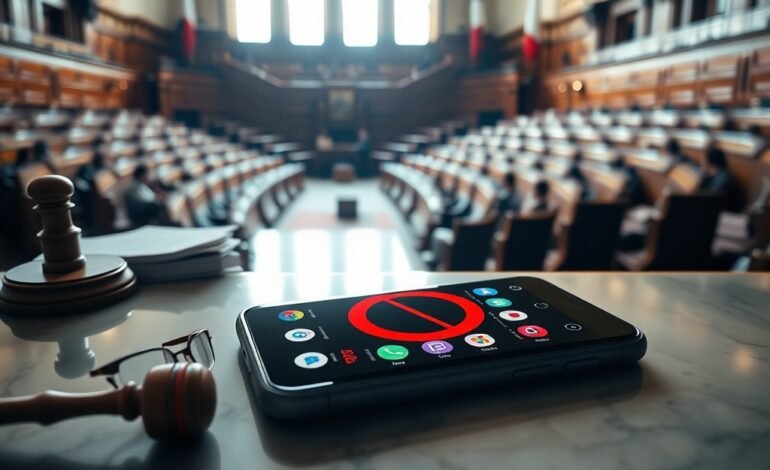
The French National Assembly voted 130‑21 to approve a bill that bars children under 15 from accessing social‑media platforms and mandates the removal of personal mobile devices from secondary schools. The text now moves to the Senate for final approval before President Emmanuel Macron signs it into law, making France the second country worldwide to set a statutory age limit on social‑media participation after Australia’s December 2025 ban for users under 16.
Why the Age Cut‑off Matters
Officials cite a growing body of research linking early, unregulated exposure to social media with mental‑health issues such as anxiety, depression, and lowered self‑esteem. A 2023 INSERM report found that adolescents who spend more than three hours daily on social platforms are twice as likely to exhibit depressive symptoms. President Macron frames the measure as a public‑health safeguard rather than a moral crusade.
From Concept to Concrete: The Road to Passage
Parliamentary hearings in late 2024 gathered testimony from psychologists, educators and tech experts. Earlier voluntary guidelines introduced in 2025 saw limited compliance, prompting the shift from recommendation to enforcement.
Opposition and Industry Concerns
Opponents—mainly far‑right and libertarian deputies—argue the law infringes personal freedoms and places undue monitoring responsibilities on the state. French digital‑industry representatives warn it could stifle innovation and push young users toward unregulated foreign platforms.
Enforcement Mechanics and Potential Pitfalls
The draft outlines a multi‑pronged approach:
- Social‑media firms must deploy robust age‑verification systems using biometric data or government‑issued IDs; non‑compliant platforms face fines up to €5 million or temporary bans.
- The Ministry of Education will conduct random school inspections and may confiscate phones found on premises.
- Penalties target both companies and schools that fail to enforce the rules.
Critics note that verification technologies can be circumvented, and children may resort to older siblings’ accounts or VPNs. The legislation also leaves video‑sharing sites and gaming platforms largely untouched.
Comparative Landscape: A Growing Global Trend
France joins a wave of digital‑policy reforms:
- United Kingdom (2024) – “digital wellbeing” framework limiting algorithmic amplification for users under 18.
- Germany – ongoing debate over age‑gates for certain online content.
- Australia (Dec 2025) – bans under‑16s from creating accounts on major social networks while allowing passive browsing.
These measures reflect a broader governmental reckoning with the societal costs of ubiquitous connectivity.
Political and Social Repercussions
Parent‑teacher associations are divided: some praise decisive action, others question enforcement practicality at home. Youth advocacy groups have staged protests, claiming the law infantilises teenagers and curtails self‑expression.
Domestically, the vote bolsters Macron’s reformist image and tests the ruling coalition’s capacity to deliver on its “digital sovereignty” agenda, aimed at reducing dependence on foreign tech giants.
Looking Ahead
If the Senate approves the bill in the coming weeks, the government will have roughly 12 months to build verification infrastructure and school‑level enforcement mechanisms. This tight timeline raises questions about the ability of public bodies and private firms to adapt without compromising user experience or data privacy.
International observers will watch closely. Success could encourage similar age thresholds elsewhere; significant backlash or implementation failures may trigger a re‑evaluation of top‑down digital regulation.
Conclusion
The National Assembly’s vote marks a pivotal moment in France’s effort to balance digital connectivity with the protection of its youngest citizens. By imposing an age limit for social‑media participation and creating phone‑free school zones, the government bets that structural constraints will curb screen‑time‑related harms. Whether the policy delivers measurable mental‑health improvements or merely drives youth toward unregulated digital spaces remains to be seen, but France has undeniably placed children’s digital welfare at the centre of national policy.
