


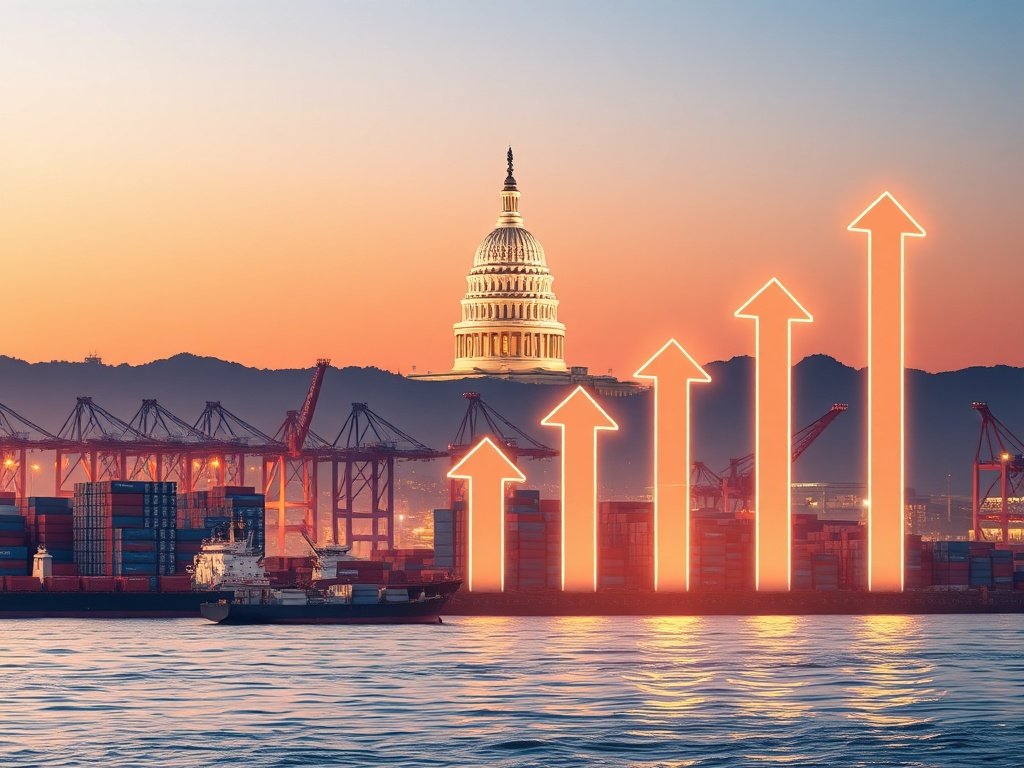



Washington Raises U.S.–Korea Tariff Ceiling to 25 %

– Washington announced a new 25 % ceiling on reciprocal duties against South Korean imports, up from the 15 % level set in 2025.
A brief history of the U.S.–Korea trade relationship
The United States and South Korea have maintained a deep‑seated commercial partnership for more than half a century, beginning with the 1962 bilateral trade agreement and later reinforced by the 2012 United States‑Korea Free Trade Agreement (KORUS FTA). Under KORUS, most industrial goods—automobiles, steel, pharmaceuticals—enjoyed reduced or zero tariffs, supporting a two‑way trade flow that reached roughly $150 billion annually in 2024.
In mid‑2025, President Donald Trump and President Yoon Suk‑yeol (referred to in the President’s statement as “President Lee”) signed a supplemental accord on 30 July 2025 to modernise KORUS, especially for electric‑vehicle components and digital services. The memorandum lowered reciprocal tariffs on a range of Korean goods to 15 percent, contingent on South Korean legislative ratification.
Despite a reaffirmation visit to Seoul on 29 October 2025, the South Korean National Assembly has not yet passed the required legislation, citing procedural reviews and domestic political calculations.
The latest tariff escalation
President Trump posted on Truth Social on 27 January 2026, framing the tariff hike as a direct response to “the Korean legislature’s failure to meet its obligations.” The post listed automobiles, lumber, pharmaceuticals and “all other reciprocal tariffs” among the categories subject to the new 25 percent ceiling.
The Korean presidential office, citing a Yonhap News Agency release, confirmed that no formal notification outlining the increase had been received from Washington.Yonhap News Agency
Economic stakes for both sides
Automotive sector
The United States imports roughly 600,000 Korean‑built vehicles each year, dominated by Hyundai and Kia. A 10‑percentage‑point duty rise could add about $1,500 to a midsize sedan, eroding Korean manufacturers’ price advantage and potentially raising costs for U.S. assemblers that rely on Korean parts.
Lumber and construction materials
South Korean firms supply specialty timber for high‑end U.S. construction projects. Higher duties are likely to shift developers toward domestic or alternative Asian sources, inflating construction costs in markets that currently rely on Korean imports.
Pharmaceuticals
Korean biotech firms have expanded their presence in the U.S. with generics and biologics. A 25 % duty could make these products less competitive, prompting hospitals and pharmacies to seek alternatives and potentially affecting patient access to certain therapies.
Overall trade balance
The United States runs a modest services surplus but a goods deficit with South Korea. Raising tariffs may narrow the goods deficit in the short term, yet it also risks retaliatory measures that could offset any gains.
Political and diplomatic dimensions
The escalation arrives amid heightened security cooperation in Northeast Asia, as Washington reinforces its umbrella over Seoul against North Korean missile tests and a more assertive China. Economic pressure may therefore be perceived as complicating the broader alliance.
Domestically, the move aligns with the administration’s “America First” agenda, which has already imposed heightened duties on Chinese steel, European agricultural products, and select digital services. Critics warn the approach could alienate allies and invite challenges at the World Trade Organization.
South Korean officials have so far refrained from a formal protest, instead highlighting the lack of an official U.S. notification. Analysts expect the Ministry of Trade, Industry and Energy to convene emergency talks with its U.S. counterpart, while the National Assembly may face pressure to accelerate the pending legislation.
Potential pathways forward
- Bilateral negotiations: Rapid diplomatic engagement—potentially mediated through the U.S. Embassy in Seoul—could produce a provisional suspension of the tariff increase while the Korean legislature finalises the agreement.
- Legislative acceleration: South Korean lawmakers may be compelled to fast‑track ratification, especially if industry groups lobby intensively to protect export markets.
- World Trade Organization recourse: If the hike conflicts with existing commitments, South Korea could file a dispute‑settlement request, a step that could delay or reverse the duties but would strain bilateral ties.
- Retaliatory measures: Seoul has historically responded with counter‑tariffs; a reciprocal move could target U.S. agricultural products or other sectors where the United States holds a competitive edge.
Outlook
The 25 % tariff ceiling marks the most significant escalation in U.S.–Korea trade tensions since KORUS entered force. Immediate impacts will be felt most acutely in automotive, lumber and pharmaceutical imports, while broader ramifications could affect supply chains, security cooperation, and the rules‑based global trading system.
Stakeholders now face a narrowing window to resolve the legislative impasse that triggered the punitive step. Whether through hurried parliamentary approval, renewed high‑level talks, or multilateral dispute resolution, the trajectory of U.S.–Korea trade relations will hinge on how quickly and constructively the two governments can bridge the current gap.
