




Pakistan‑Iran Diplomatic Dialogue Highlights Regional Stability Efforts
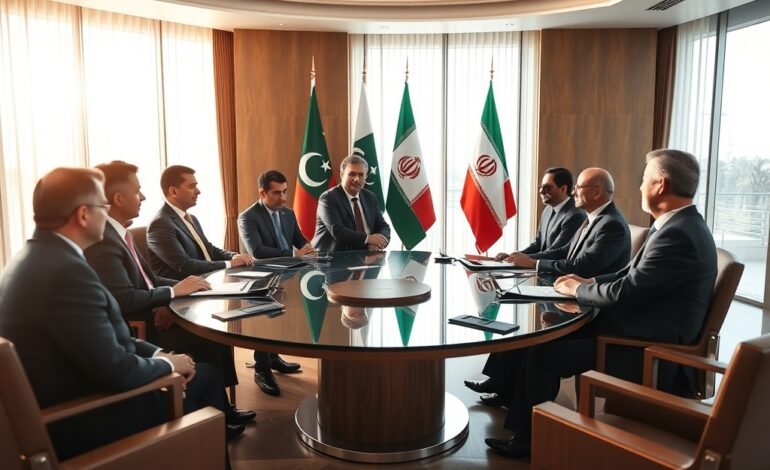

– Islamabad
A Call Set Against a Volatile Backdrop
The high‑level phone conversation between Pakistan’s Deputy Prime Minister and Foreign Minister Mohammad Ishaq Dar and Iran’s Foreign Minister Abbas Araqchi occurred amid a “confluence of pressures” that have strained South‑Asian and Middle‑Eastern neighbourhoods. In Afghanistan, the United Nations‑brokered peace process remains fragile, with intermittent clashes between the Taliban‑led administration and residual insurgent groups threatening the border provinces shared by Pakistan and Iran. At the same time, renewed Western sanctions on Iran have hampered cross‑border trade and delayed energy projects, while India‑Pakistan ties stay tense after a series of border incidents earlier in 2026.Official statements released by both ministries
The call builds on back‑channel communications that began in late 2025, when Islamabad and Tehran signaled a willingness to revive stalled economic corridors such as the proposed Iran‑Pakistan gas pipeline and a trans‑national railway linking the two nations. It also aligns with a broader regional push led by the Shanghai Cooperation Organisation and the Gulf Cooperation Council to coordinate responses to illicit trafficking and extremist networks across porous frontiers.
Profiles of the Key Actors
Mohammad Ishaq Dar
Dar is a veteran politician who has alternated between finance minister, deputy prime minister and foreign minister over the past two decades. He is viewed as a pragmatic architect of Pakistan’s foreign policy, balancing ties with China, Saudi Arabia and the United States while managing sensitivities with neighbouring states. Recent public remarks stress “constructive engagement” as the only viable path to de‑escalate the region’s “evolving security environment.”
Abbas Araqchi
Appointed Iran’s foreign minister in early 2025, Araqchi brings diplomatic agility from his tenure as Iran’s UN ambassador and a negotiator in nuclear talks. Charged with mitigating the impact of Western sanctions, he has prioritized deepening economic linkages with Pakistan, a cornerstone of Tehran’s “West‑Asia connectivity” agenda.
Core Themes of the Conversation
Officials briefed on the call said the discussion focused on four main areas:
- Security Coordination: Both ministers stressed the need for enhanced intelligence sharing to counter militant resurgence in the Afghanistan‑Pakistan‑Iran nexus and hinted at joint patrols or a trilateral security forum that could include Afghanistan’s transitional government.
- Economic Collaboration: The stalled Iran‑Pakistan gas pipeline was revived. Dar urged Iran to speed up technical studies, while Araqchi highlighted the need for alternative financing—potentially via multilateral development banks or sovereign wealth funds.
- Water Management: The Helmand River, flowing from Afghanistan into Iran and affecting downstream Pakistani agriculture, was identified as a priority for joint water‑sharing agreements, which could ease long‑standing grievances in Balochistan and Sindh.
- Diplomatic Outreach: Both sides reiterated that “dialogue and diplomacy remain the only viable way forward,” aiming to isolate extremist narratives and promote a regional order based on mutual respect and non‑interference.
Strategic Implications for the Region
Stabilising the Afghan Frontier
Coordinated security measures could present a united front to the Taliban and other non‑state actors, potentially curbing arms and fighter flows across the borders and supporting a broader, inclusive Afghan peace framework.
Economic Resilience Amid Sanctions
Reviving the gas pipeline would diversify Pakistan’s energy mix, reducing reliance on costly imported LNG, while giving Iran a vital export market to offset the impact of Western financial restrictions.
Balancing Great‑Power Influences
Both Islamabad and Tehran are navigating competing interests from China’s Belt and Road Initiative, the United States’ Indo‑Pacific focus, and Russia’s re‑engagement in the Middle East. A coordinated diplomatic posture could give them greater leverage in negotiations over infrastructure financing and security guarantees.
Regional Water Governance
Joint water‑management could set a precedent for cooperative resource sharing in a climate‑stressed region, delivering downstream benefits for agriculture, food security and rural livelihoods across Afghanistan, Iran and Pakistan.
Domestic Reactions and Political Calculus
In Pakistan, opposition parties greeted Dar’s outreach with cautious optimism, viewing it as a potential remedy for border‑security concerns and chronic energy deficits. Analysts suggest the call could bolster Dar’s standing ahead of the upcoming parliamentary session, where budget allocations for the pipeline and border infrastructure will be debated.
In Tehran, state media framed Araqchi’s engagement as proof of Iran’s “open‑door” policy toward its southern neighbours. Critics, however, warn that any substantive progress on the pipeline hinges on the easing of sanctions—a variable that remains uncertain given the United States’ recent hardline stance on Iran’s nuclear programme.
Looking Ahead: Prospects for Concrete Action
While the conversation did not produce immediate agreements, it set in motion several follow‑up mechanisms:
- A bilateral working group on security and counter‑terrorism is slated to convene in Islamabad within the next two months to draft a memorandum of understanding on intelligence exchange.
- Technical teams from both ministries are expected to meet in Tehran later this quarter to assess the feasibility of restarting the gas pipeline, focusing on route optimisation and financing structures that could bypass traditional banking channels.
- A trilateral water commission involving Afghanistan is being explored, potentially under the United Nations Watercourses Convention, to address the Helmand River basin’s allocation.
The success of these initiatives will depend on political will, external financing, and the broader geopolitical climate, especially U.S. policy toward Iran and the stability of the Afghan peace process.
Conclusion
The telephone exchange between Mohammad Ishaq Dar and Abbas Araqchi marks a pragmatic turn in Pakistan‑Iran relations, where mutual security concerns and shared economic interests are prompting a renewed emphasis on diplomatic engagement. As regional fault lines become increasingly pronounced—through insurgent activity, energy competition or water scarcity—the willingness of both capitals to coordinate their responses could serve as a stabilising factor for a volatile neighbourhood. Whether this dialogue translates into tangible projects and security frameworks remains to be seen, but the act of reaching out signals a clear message: in an era of heightened uncertainty, constructive conversation is being positioned as the cornerstone of regional resilience.
