






Latifa bint Mohammed Honors Zoubeir Jlassi as Winner of the World’s Largest AI Film Award
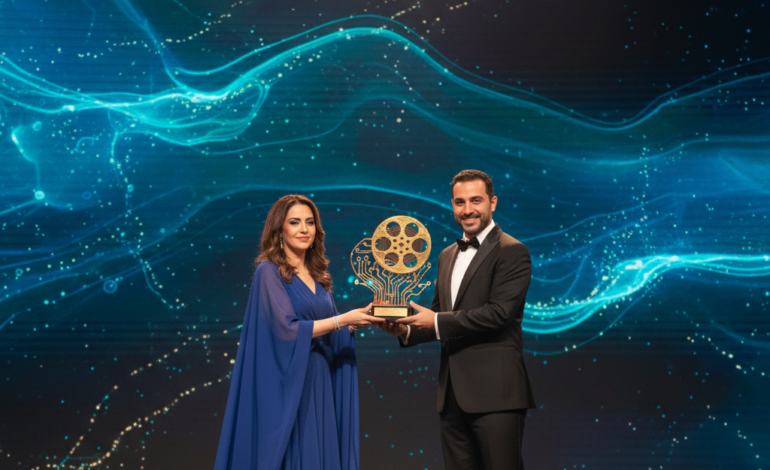

In a ceremony that fused cutting‑edge technology with cultural diplomacy, Her Highness Sheikha Latifa bint Mohammed bin Rashid Al Maktoum, chair of the Dubai Culture and Arts Authority, presented a US $1 million prize to Tunisian director Zoubeir Jlassi for his AI‑driven short film “Lily.” The award, billed as the world’s most lucrative recognition for artificial‑intelligence‑enhanced cinema, was conferred under the auspices of the fourth 1 Billion Followers Summit and in partnership with Google’s Gemini platform.
The 1 Billion Followers Summit: Redefining the Content‑Creation Economy
Held from 9 to 11 January 2026 across the Emirates Towers, the Dubai International Financial Centre and the Museum of the Future, the summit positioned itself as the premier gathering for the emerging “content for good” movement. Organized by the UAE Government Media Office, the three‑day event attracted more than 15 000 creators, influencers and industry leaders, alongside 580 speakers, 150 chief executives and a host of global experts. The summit’s theme—“Content for Good”—aims to harness the reach of digital media to promote ethical values, civic awareness and cross‑cultural dialogue.
Within this framework, the AI Film Award emerged as a flagship initiative, designed to accelerate the integration of generative‑AI tools into narrative filmmaking while insisting on a socially responsible message. The prize pool, jointly funded by the summit’s organizers and Google, signals a rare convergence of public policy, private technology investment and artistic patronage.
Why the AI Film Award Matters for Filmmakers
For creators, the AI Film Award offers more than a financial windfall; it provides validation that AI‑augmented storytelling can meet the highest artistic standards. The award’s criteria—minimum 70 % generative‑AI content, transparent ethical use, and a purposeful narrative—set a benchmark that many industry observers predict will shape future funding models for AI‑driven cinema.
From 3 500 Global Submissions to a Single Winner
The competition attracted an unprecedented 3 500 film submissions from creators in 116 nations, reflecting a worldwide appetite for AI‑augmented storytelling. More than 30 000 individuals expressed interest in the award, underscoring the event’s reach. A specially convened jury of 40 seasoned professionals—ranging from Google Studios executives to Cannes‑Lions jurors—screened a cumulative 400 hours of footage. After an initial compliance check eliminated non‑conforming works, 100 titles were shortlisted.
The next phase employed Google Gemini’s proprietary analytics to verify that each entry met the 70 % generative‑AI threshold. The jury then selected twelve films for a public‑vote round, after which five were elevated to the final stage. The final contenders were:
- “Portrait No. 72” – Philippines (Rodson Verr Suarez)
- “Cats Like Warmth” – South Korea (Lee Su Yeol)
- “Lily” – Tunisia (Zoubeir Jlassi)
- HEAL – Egypt (Mohamed Gomaa)
- The Translator – United States (Pylyp Li)
Each of these works demonstrated a blend of clear narrative structure, striking visual aesthetics and a transparent, ethical use of AI, meeting the award’s rigorous standards for artistic innovation and social impact.
“Lily”: A Haunting Meditation on Guilt and Redemption
Zoubeir Jlassi’s winning short, “Lily,” tells the story of an isolated archivist whose routine existence is shattered after a hit‑and‑run accident leaves a child’s doll lodged on his car’s bumper. The doll, rendered through a combination of AI‑generated textures and motion‑capture animation, becomes a spectral conduit linking the protagonist to the victim’s family. As the narrative unfolds, the archivist is forced to confront the moral weight of his silence, ultimately choosing to confess to authorities and reunite the doll with the hospitalized child.
The film’s visual language—a seamless fusion of hyper‑realistic CGI and AI‑enhanced cinematography—earned particular praise from the jury. Dan Germain, executive creative director at Google Studios, noted that “the piece leverages generative AI not as a gimmick but as an integral storytelling device, allowing the inanimate doll to convey an emotional resonance that would be difficult to achieve through conventional means.”
Beyond its technical merits, “Lily” embodies the summit’s “Content for Good” ethos. Its exploration of accountability, empathy and the unseen consequences of everyday actions resonates with the broader push for media that elevates humanitarian values.
Key Themes in “Lily” and Their Relevance to AI Ethics
The short film tackles three themes that are central to the ongoing debate about AI in creative industries: responsibility (the archivist’s moral dilemma), empathy (the doll as a surrogate for a grieving child), and transparency (the clear disclosure of AI’s role in production). By weaving these concepts into a compelling narrative, Jlassi demonstrates how AI can be a conduit for ethical storytelling rather than a black‑box shortcut.
The Jury: A Cross‑Section of AI and Creative Expertise
The panel that evaluated the entries reflected the interdisciplinary nature of the award. In addition to Google Studios’ Dan Germain, the jury featured:
- Ali Ali, filmmaker, co‑founder of Good People and Cannes Lions film jury member, known for championing socially conscious narratives.
- Christian Haas, executive creative director at YouTube, who brought insights on audience engagement in the algorithmic age.
- Piotr Dabkowski, co‑founder and CTO of ElevenLabs, a leading voice‑synthesis company and a TIME 100 AI 2024 honoree, who assessed the auditory dimensions of the submissions.
- Marina Mogilko, entrepreneur and content creator with a following exceeding 18 million, who offered a creator‑centric perspective on the practicalities of AI adoption.
Their collective expertise ensured that the final decision balanced artistic vision, technical rigor and the capacity of each film to convey a purposeful message.
Policy, Technology and the Future of Creative Economies
The $1 million prize is more than a symbolic endorsement; it constitutes a strategic investment by the United Arab Emirates in the emerging AI‑creative sector. By aligning with Google’s Gemini platform, the UAE signals confidence in the commercial viability of AI‑generated content while also establishing regulatory and ethical benchmarks.
Her Highness Sheikha Latifa’s remarks highlighted this dual objective. She emphasized that “purposeful content plays a vital role in promoting positive values, strengthening community awareness and inspiring creative thinking.” The prize, she argued, “helps drive and grow the digital content industry, while encouraging young people to innovate through works that break conventional boundaries.”
Analysts view the award as a bellwether for a broader shift in media production. A recent report by the International Association of Film and Television Arts projects that AI‑assisted workflows could reduce post‑production costs by up to 30 % within the next five years, while also democratizing access to high‑quality visual effects for creators outside traditional studio systems. The UAE’s proactive stance—providing both financial incentives and a high‑profile platform—may attract further investment from technology firms seeking to test and showcase their generative tools in a controlled, ethically framed environment.
A Global Showcase of Emerging Talent
The breadth of entries—spanning continents, languages and cultural contexts—underscores the universal appeal of AI as a creative catalyst. Films such as Egypt’s “HEAL,” South Korea’s “Cats Like Warmth,” and Canada’s “Pursuit of Pearl” each explored distinct thematic concerns, from post‑pandemic recovery to environmental stewardship, while employing AI to augment visual storytelling.
The summit’s public‑voting component, which narrowed the field from twelve to five, also demonstrated the power of audience participation in shaping artistic recognition. By allowing a worldwide community of creators and viewers to cast votes, the organizers reinforced the democratic ethos that underpins the “Content for Good” narrative.
Impact on Regional Film Industries
For North African and Middle Eastern filmmakers, the AI Film Award offers a rare gateway to global exposure. Zoubeir Jlassi’s victory, for instance, positions Tunisia as a budding hub for AI‑enhanced cinema, encouraging regional film schools and production houses to invest in generative‑AI curricula and lab facilities.
Looking Ahead: An Ecosystem in Motion
The 1 Billion Followers Summit, now in its fourth year, has evolved from a regional conference into a global incubator for new‑media innovation. Its partnership with Google and the substantial prize money for the AI Film Award signal a commitment to building an ecosystem where talent, technology and purpose intersect.
Her Highness Sheikha Latifa concluded the ceremony by reaffirming the UAE’s dedication to “building an advanced ecosystem that supports talent and equips creators with the tools to expand their impact on the global stage.” In practical terms, this translates into continued funding for AI‑focused labs, mentorship programs for young filmmakers and regulatory frameworks that balance creative freedom with ethical safeguards.
Future Editions of the AI Film Award
Organizers have hinted that the next edition will expand the prize pool, introduce category‑specific awards (e.g., Best AI‑Generated Soundtrack) and broaden eligibility to include immersive formats such as virtual reality and mixed reality experiences. Such expansions could further cement the award’s reputation as the gold standard for AI‑driven cinematic excellence.
Conclusion: A Milestone in the Convergence of Artificial Intelligence and Cinema
Zoubeir Jlassi’s triumph with “Lily” marks a watershed moment in the convergence of artificial intelligence and cinematic art. The film’s haunting narrative, powered by sophisticated AI tools, exemplifies how technology can amplify human storytelling rather than replace it. As the UAE and its partners forge ahead with ambitious initiatives like the AI Film Award, the global creative community watches closely, anticipating a future where AI‑enhanced content not only entertains but also elevates societal values.
The inaugural edition of the AI Film Award has set a high bar for subsequent competitions, establishing rigorous technical criteria, a transparent judging process and an unwavering focus on purposeful messaging. Whether this model will be replicated elsewhere remains to be seen, but the precedent is clear: when governments, tech giants and artists align around a shared vision of “Content for Good,” the possibilities for cultural innovation are boundless.
