Dubai Launches Global Competition for World’s First Net‑Zero Residential Villa

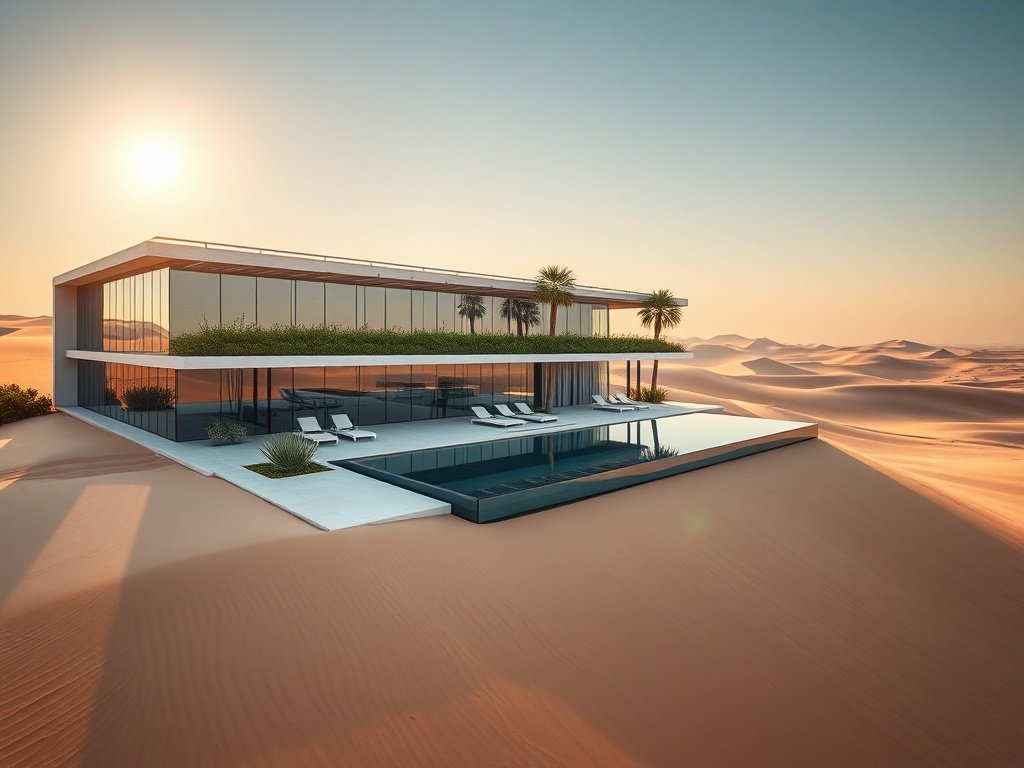
– Dubai’s municipal authority unveiled a worldwide competition aimed at delivering the planet’s inaugural “first‑of‑its‑kind” residential villa, blending cutting‑edge construction technologies with the emirate’s sustainability targets.
Setting the scene: Dubai’s ambition for a new housing paradigm
Over the past decade, Dubai has acted as a laboratory for architectural experimentation, from record‑breaking skyscrapers to the rapid deployment of 3‑D‑printed office blocks. The new “global challenge” invites architects, engineers, developers and technology firms worldwide to submit proposals for a single‑family dwelling that will set a benchmark for energy efficiency, material innovation and occupant wellbeing.
Entrants must demonstrate how their design can thrive within Dubai’s extreme heat, high humidity and scarce freshwater conditions while surpassing conventional building codes.
Why a “first residential villa” matters
Dubai’s rapid urbanisation has traditionally favoured high‑rise, mixed‑use projects. A stand‑alone villa introduces distinct design imperatives: self‑sufficiency, reduced carbon footprints and integration of smart‑home technologies that operate independently of municipal utilities. The municipality aims to create a prototype that can be replicated across the UAE and other arid regions.
Key performance indicators
- Net‑zero energy consumption – the villa must generate as much clean energy as it uses annually, primarily via photovoltaic façades and rooftop solar arrays.
- Water‑positive operation – rain‑water harvesting, grey‑water recycling and possibly atmospheric water generation to offset Dubai’s high per‑capita water demand.
- Low‑embodied‑carbon materials – recycled aggregates, bio‑based composites or locally sourced low‑emission concrete alternatives.
- Smart‑grid integration – real‑time monitoring, adaptive shading and AI‑driven climate control to optimise comfort while minimising resource use.
The structure of the competition
The evaluation will occur in multiple phases. An initial screening checks compliance with the technical brief; ten shortlisted concepts will then develop detailed design packages, including BIM models, lifecycle analyses and cost estimates. A panel of municipal officials, international sustainability experts and leading construction firms will adjudicate the final round.
Winners receive a grant covering part of construction costs, priority access to municipal land parcels for the pilot build, and long‑term support for post‑occupancy performance monitoring. The project will also be promoted through Dubai’s global media channels.
Potential ripple effects across the construction sector
- Mainstreaming of 3‑D printing – a villa prototype could prove the technology’s viability for residential units, potentially cutting construction waste by up to 70 %.
- Supply‑chain localisation – mandating locally sourced low‑carbon materials may spur domestic manufacturers of bio‑based composites and recycled‑aggregate concrete.
- Regulatory evolution – performance‑based metrics could inform future updates to the Dubai Building Code, shifting focus from prescriptive specifications to outcomes such as energy balance and water neutrality.
- Investor confidence – a demonstrable net‑zero villa provides tangible proof for investors targeting sustainable real‑estate assets in the Gulf.
Aligning with global sustainability agendas
The challenge supports United Nations Sustainable Development Goal 11 (“Sustainable Cities and Communities”) and the International Energy Agency’s goal of halving global building emissions by 2030. By showcasing high‑performance residential architecture in a desert climate, Dubai offers a practical case study for other hot‑climate cities.
Amid rising material costs, supply‑chain disruptions and mounting pressure to decarbonise, the prototype could serve as a reference for policymakers, educators and industry bodies seeking scalable solutions.
Looking ahead
Submissions close in late summer 2026. Construction of the winning design is slated to begin in early 2027, after which the villa will be occupied and continuously monitored as a living laboratory for researchers and prospective homeowners.
Beyond a design contest, the global challenge is a strategic move to cement Dubai’s reputation as a crucible for sustainable urban innovation, delivering a blueprint that can be replicated worldwide and reshaping residential building concepts for the 21st century.