Europe’s Arctic Wake‑up Call: Macron, Denmark and Greenland Redefine Strategic Outlook

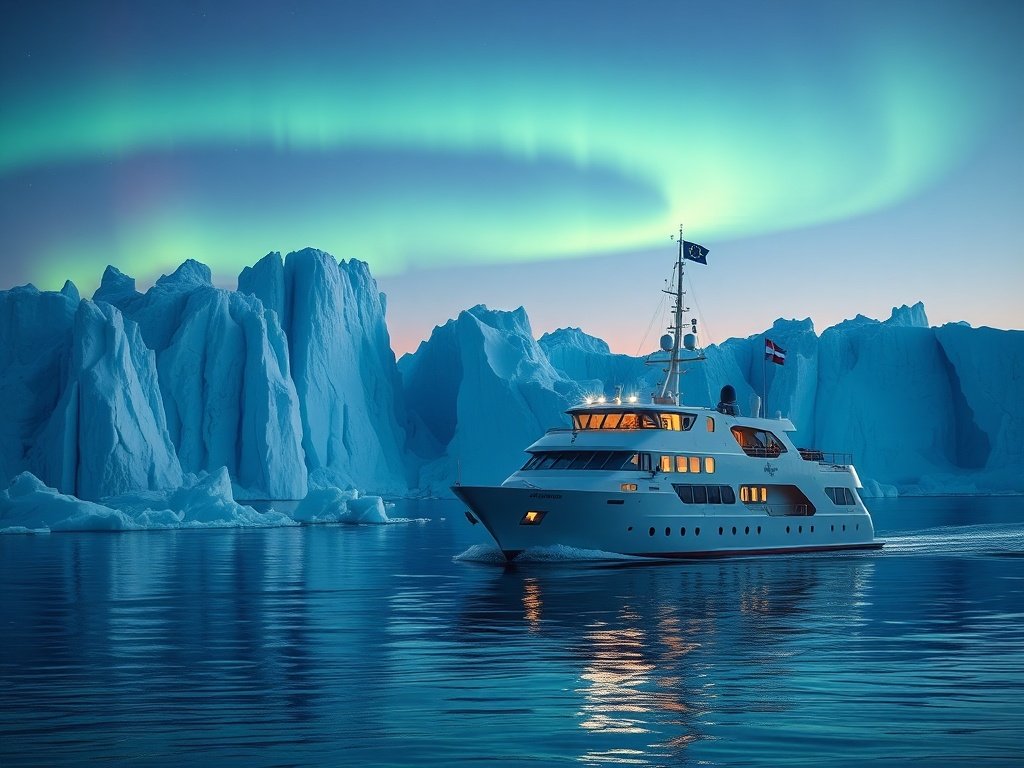
– In Paris, French President Emmanuel Macron met with Denmark’s Prime Minister Mette Frederiksen and Greenland’s Premier Jens‑Frederik Nielsen to announce a new European stance on Arctic security. The three leaders framed a recent U.S. proposal to “acquire” Greenland as a “strategic wake‑up call” for the continent European diplomatic sources.
From a Trumpian Threat to a Continental Re‑calibration
Late 2025 saw former U.S. President Donald Trump suggest that the United States might consider purchasing Greenland, a Danish autonomous territory rich in rare‑earth minerals and hydro‑carbon potential. Although dismissed as political posturing, the remarks exposed a fissure in the trans‑Atlantic alliance, prompting rapid deployments of modest French, German, British, Dutch and Nordic troops to the island European diplomatic sources. France highlighted its commitment by sending the aircraft carrier Charles de Gaulle from Toulon for North Atlantic exercises.
Macron’s “Strategic Wake‑up Call”
Speaking in French, Danish, and Kalaallisut, Macron warned that Europe could no longer rely passively on U.S. security guarantees. “The awakening must focus on asserting our European sovereignty, on contributing to Arctic security, on combating foreign interference and disinformation, and on confronting global warming,” he said Paris press conference transcript. He invoked the United Nations Charter as the legal basis for European action and addressed Nielsen in Greenlandic to underscore self‑determination.
Denmark and Greenland Push for Strategic Autonomy
Frederiksen used the occasion to reiterate Denmark’s long‑standing goal of reducing dependence on U.S. military protection. In a recent speech at Sciences Po she warned that “the world order … is under pressure, it’s changing rapidly” and called for immediate defence investment, noting that waiting for NATO’s 2035 5 % GDP spending target would be “too late” Sciences Po address. The Danish stance aligns with the EU’s 2025 pledge to raise defence budgets to 5 % of GDP, up from the 2 % benchmark set for 2024.
Greenland’s Perspective: Sovereignty, Climate, and Security
Premier Nielsen thanked France for its “unwavering support” and stressed Greenland’s desire for greater international recognition. With a population of roughly 57 000, the island’s strategic relevance is amplified by melting sea ice, new shipping lanes and untapped mineral deposits. Nielsen highlighted the need for a security framework that respects Greenlandic self‑determination while addressing cyber‑security, disinformation and the rule of law Greenlandic government statement.
The Arctic as a New Front in Global Power Competition
Climate change is turning the Arctic from a scientific outpost into a contested arena. Canada, Russia, Norway, the United States and the Nordic states are expanding icebreaker fleets, surveillance satellites and forward‑deployed forces. European leaders now argue for an independent Arctic doctrine, separate from NATO’s Euro‑Atlantic focus. France’s carrier deployment and the modest EU troop presence in Greenland hint at an embryonic European Arctic command structure aimed at counterbalancing Russian expansion and any future unilateral U.S. action.
Implications for Trans‑Atlantic Relations
While the Biden administration has reaffirmed NATO commitments, the Trump episode has left lingering suspicion about American policy predictability. Calls for a “European defence capability” could strain the trans‑Atlantic partnership if interpreted as a move toward strategic autonomy that sidelines U.S. leadership. Nonetheless, NATO remains the primary forum for Arctic security coordination, with its latest strategic concept emphasizing joint training, intelligence sharing and interoperable Arctic‑capable platforms NATO strategic concept 2025.
Germany’s Role and the Path Forward
German Chancellor Friedrich Merz hosted Frederiksen in Berlin, pledging “Germany’s solidarity” with Denmark and Greenland. Germany’s involvement underscores a pan‑European response and points to potential cooperation on procurement, research and infrastructure to boost Arctic resilience.
Likely Concrete Steps
- Formalising an EU Arctic Task Force – a body within the European Defence Agency to harmonise capabilities and develop a shared situational picture.
- Investing in dual‑use technologies – satellite monitoring, autonomous underwater vehicles and renewable‑energy installations serving both defence and climate goals.
- Deepening civil‑societal partnerships – involving Indigenous Greenlandic communities in policy formulation.
- Negotiating a new Arctic governance framework – addressing mineral extraction, shipping regulations and climate adaptation.
Conclusion: A Continental Reckoning
The brief flare of American interest in Greenland has catalysed a broader European introspection. Macron’s “wake‑up call” captures a growing consensus that Europe must cultivate a more self‑reliant security posture in a region reshaped by climate change. The convergence of French naval power, Danish diplomatic resolve, Greenlandic self‑determination and German political support could redefine Europe’s role in the Arctic, turning rhetoric into capability through higher defence spending, integrated command structures and robust climate‑security policies European policy analysis, 2026.