


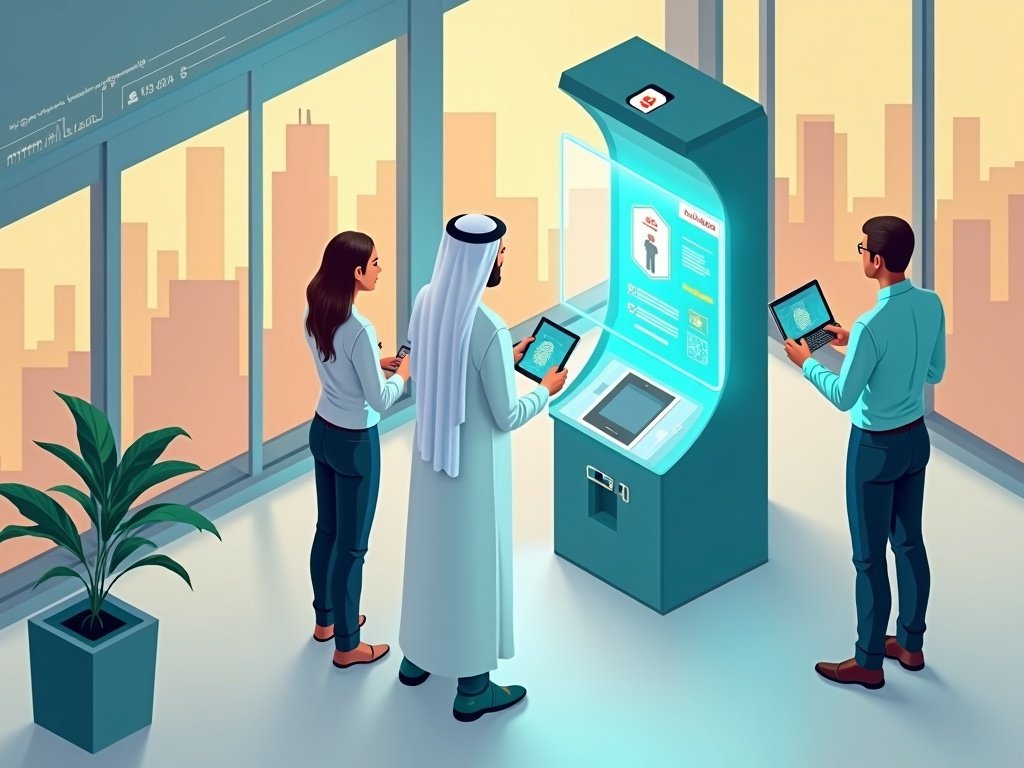



Your Emirates ID Is About to Get a Major Upgrade
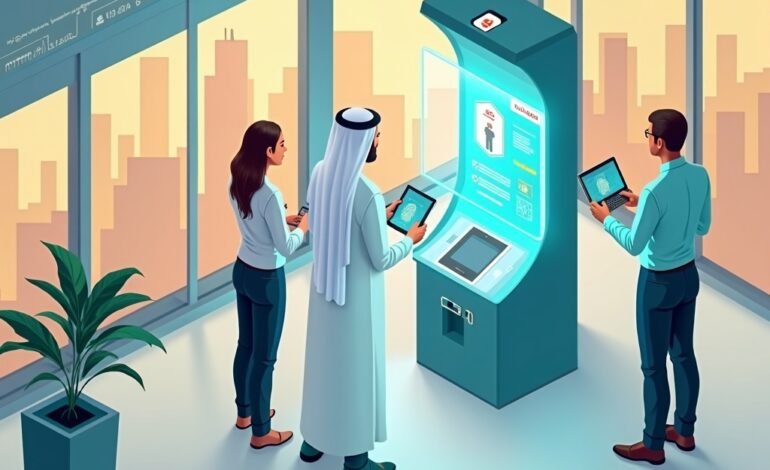

The Federal Authority for Identity and Citizenship (ICA), with support from the Telecommunications and Digital Government Regulatory Authority (TDRA), has announced a comprehensive technological overhaul of the Emirates ID set to transform how UAE residents interact with government and private sector services. The upgrade, scheduled for full-scale rollout beginning in mid-2026, represents a fundamental shift from a physical identification card to a unified digital identity platform that integrates advanced biometrics, contactless verification, and secure API connectivity across the UAE’s smart city infrastructure. The enhanced Emirates ID will serve as the cornerstone of the country’s digital identity framework, linking directly to UAE Pass and existing government service portals while introducing new capabilities for digital wallet integration and real-time service authentication. This article examines the specific technological features being deployed, the phased implementation timeline across all seven emirates, the practical impact on daily transactions and government interactions, and the security framework protecting resident data under UAE’s evolving data protection regulations.
What the Emirates ID Upgrade Entails: A 2026 Overview
The Emirates ID upgrade represents a fundamental architectural shift in how the UAE manages national identity verification and service delivery. According to official statements released by ICA and TDRA in early 2026, this is not a cosmetic refresh of the existing card but a complete reimagining of the Emirates ID as both a physical credential and the core authentication layer for the UAE’s national digital identity infrastructure. The previous Emirates ID functioned primarily as a static identification document with basic chip storage for biometric data. The 2026 version transforms the ID into an active digital key that residents use to access government services, banking products, healthcare systems, and private sector platforms through secure, real-time authentication protocols.
The upgrade introduces several key changes that distinguish it from the previous generation:
- Physical card now includes advanced secure chip with expanded storage capacity for encrypted credentials and digital certificates
- Native integration with UAE Pass digital identity platform for single sign-on across all government services
- Contactless verification using NFC and Bluetooth Low Energy (BLE) protocols for smartphone and point-of-service authentication
- Multi-modal biometric capture including enhanced fingerprint and facial recognition with liveness detection
- QR code generation for temporary identity verification in scenarios where physical card presentation is impractical
- Digital wallet compatibility allowing secure storage in Apple Wallet, Google Wallet equivalents, and UAE-developed wallet applications
- Open API framework enabling authorized third-party services to request and receive verified identity attributes with explicit user consent
From Physical Card to Integrated Digital Identity
The conceptual foundation of the upgraded Emirates ID moves beyond the traditional government-issued identification card model. The new system functions as a bidirectional identity verification platform where the physical card serves as one authentication method among multiple digital options. Residents can choose to authenticate their identity using the physical card at an NFC reader, through a smartphone app linked to their digital Emirates ID, or via biometric verification at designated smart gates and service centers. This flexibility aligns with UAE’s broader smart city initiatives led by Smart Dubai and the Abu Dhabi Digital Authority (ADDA), where the goal is to eliminate friction in service delivery while maintaining the highest security standards. The Emirates ID now acts as the cryptographic anchor for a resident’s entire digital identity profile, storing verifiable credentials that can be selectively shared with banks for Know Your Customer compliance, with healthcare providers for medical record access, or with government agencies for license renewals and permit applications.
Key Technological Features and Enhancements
The technical specifications of the upgraded Emirates ID reflect a substantial investment in next-generation identity management technology. The card incorporates a secure element chip compliant with Common Criteria EAL 5+ certification, providing hardware-level protection against physical tampering and side-channel attacks. The chip stores multiple sets of biometric templates, digital certificates for electronic signatures, and encrypted keys for secure communication with authorized service providers. NFC capability operates on the ISO/IEC 14443 standard, enabling contactless reading at ranges up to 10 centimeters for payment terminals, access control systems, and mobile device authentication. Bluetooth Low Energy integration supports proximity-based authentication scenarios where a resident’s smartphone can verify their identity to nearby devices without requiring physical card contact.
The upgraded Emirates ID includes the following technical specifications:
- Secure element chip with 144KB memory for credential storage and cryptographic operations
- Dual-interface design supporting both contact and contactless reading protocols
- NFC Type A and Type B compatibility for universal terminal support across UAE infrastructure
- BLE 5.2 radio for smartphone pairing and proximity authentication within 10-meter range
- High-resolution 2D barcode and dynamic QR code generation capability for backup verification
- Tamper-evident holographic security features and UV-reactive printing for physical authentication
- Battery-free passive operation with power harvested from reader electromagnetic field
- Support for PKI-based digital signatures compliant with UAE Federal Law on Electronic Transactions
Biometric and Security Upgrades
The biometric capture process for the new Emirates ID uses multi-modal systems that record fingerprints from all ten fingers, high-resolution facial images, and iris scans where required for enhanced security clearances. The system employs liveness detection algorithms developed in collaboration with international cybersecurity firms to prevent spoofing attacks using photographs, masks, or synthetic fingerprints. Anti-spoofing measures include analysis of blood flow patterns in fingerprints, micro-movement detection in facial recognition, and challenge-response protocols during authentication attempts. All biometric templates are stored in encrypted format using AES-256 encryption, with keys managed through hardware security modules operated by ICA under strict access controls.
The security architecture includes:
- Liveness detection using pulse oximetry for fingerprint authentication and micro-expression analysis for facial recognition
- Multi-factor authentication combining biometric verification with PIN or smartphone possession proofs
- End-to-end encryption for all data transmission between card, reader, and backend systems using TLS 1.3 protocol
- Blockchain-based audit logging of all authentication events stored on distributed ledgers maintained by TDRA
- ISO 30107-3 compliance for presentation attack detection in biometric systems
- Regular third-party security audits conducted by firms certified under ISO 27001 information security standards
Digital Functionality and API Integration
The upgraded Emirates ID introduces an open API framework that allows authorized entities in both public and private sectors to request verified identity attributes directly from the national identity system with explicit user consent. Banks can query an applicant’s nationality, residency status, and income bracket without requiring document uploads. Healthcare providers can access a patient’s Emirates ID number and emergency contact information through secure API calls authenticated using OAuth 2.0 protocols. Telecom operators can verify a customer’s address and identity for SIM card registration through real-time queries that return cryptographically signed responses confirming the information’s authenticity.
The identity wallet concept enables selective disclosure, where residents control exactly which attributes are shared with each service provider. A resident applying for a credit card can choose to share their employment status and salary band without revealing their exact income figure. A resident checking into a hotel can confirm their identity and passport details without exposing their home address or phone number. This privacy-preserving architecture uses zero-knowledge proof protocols that allow verification of claims without revealing the underlying data, positioning the UAE as a leader in user-centric digital identity systems aligned with principles established by organizations like the World Wide Web Consortium and the Decentralized Identity Foundation.
Timeline and Phased Rollout Plan for UAE Residents
The official implementation timeline for the Emirates ID upgrade spans 18 months from initial pilot programs in Q2 2026 through full nationwide deployment by Q4 2027. ICA has structured the rollout in phases designed to minimize disruption while ensuring thorough testing of the new systems across different demographic groups and geographic regions. The upgrade will primarily align with natural renewal cycles for existing Emirates ID holders, meaning residents whose cards are set to expire between mid-2026 and end-2027 will receive the upgraded version automatically when they renew. Residents with IDs that remain valid beyond 2027 will have the option to apply for early adoption of the upgraded card for a standard renewal fee, currently set at AED 100 for the physical card and AED 70 for digital-only enrollment.
| Phase | Timeline | Target Group | Locations |
|---|---|---|---|
| Pilot Phase 1 | April 2026 to June 2026 | Federal government employees and new visa applicants | Amer centers in Dubai, Tadweer centers in Abu Dhabi |
| Pilot Phase 2 | July 2026 to September 2026 | Emirates government employees and residents renewing expired IDs | All typing centers and ICA service counters in Dubai and Abu Dhabi |
| Nationwide Rollout | October 2026 to March 2027 | All residents due for renewal, voluntary early adopters | All emirates, all authorized service centers including mall kiosks |
| Digital Wallet Launch | January 2027 | All upgraded ID holders | Digital enrollment via UAE Pass mobile application |
| Full Integration | April 2027 to December 2027 | Completion of backend system integration across all services | UAE-wide digital service activation |
Pilot Programs and Initial Availability
The pilot programs target specific groups to validate the technology and enrollment processes under real-world conditions before broader deployment:
- Federal government employees in ministries coordinating with ICA for controlled testing environment
- New residents applying for first-time Emirates IDs to establish baseline enrollment procedures
- Residents whose IDs expired in Q1 2026 requiring immediate renewal serving as beta test cohort
- Corporate employees in free zones like Dubai Internet City and Abu Dhabi Global Market testing business integration
- Healthcare professionals at government hospitals piloting medical credential integration
- Students at federal universities testing education sector use cases for campus access and exam verification
Impact on Daily Life and Government Services
The upgraded Emirates ID will eliminate multiple points of friction that currently slow service delivery and transaction completion across the UAE. Airport e-gates at Dubai International Airport, Abu Dhabi International Airport, and Sharjah International Airport will process Emirates ID holders in under three seconds through facial recognition linked to the new biometric database, compared to current processing times averaging 15 to 20 seconds. Banking KYC processes that currently require residents to visit branches with physical documents will become fully digital, with bank apps authenticating a customer’s identity through the Emirates ID API and receiving verified data directly from ICA systems. Healthcare facilities will access a patient’s emergency contact information, blood type, and medical history permissions through a single Emirates ID scan, reducing registration time and improving care coordination.
Key service improvements include:
- Instant vehicle registration renewals through RTA and municipal traffic departments with identity auto-verification
- Digital signing of tenancy contracts and sale agreements through blockchain-based document platforms accepting Emirates ID certificates
- Real-time salary certificate generation for financing applications by employers authorized to access employment verification APIs
- Automated school enrollment for children linked to parent Emirates IDs with education eligibility confirmation from Ministry of Education systems
- One-tap utility connection activation for DEWA, ADDC, SEWA, and FEWA with address verification completed digitally
- Simplified SIM card registration at Etisalat and du outlets with instant identity confirmation replacing manual document checks
- Streamlined customs clearance for residents returning from international travel through advance passenger information integration
Transformation of Public and Private Sector Verification
The business efficiency gains from the Emirates ID upgrade extend across industries reliant on identity verification for customer onboarding and compliance. Real estate agencies will complete lease agreements in minutes rather than hours by eliminating the need to photocopy tenant documents and manually verify employment letters. The entire verification happens through an API call that confirms the tenant’s legal residency status and employment directly from government sources. Telecom operators will reduce fraud in mobile account creation by authenticating new customers through biometric verification at the point of sale, with the customer’s identity matched against ICA records in real time to detect duplicate accounts or identity theft attempts.
Smart Dubai’s paperless government initiative, which aims to eliminate all paper transactions in government services by 2028, relies on the upgraded Emirates ID as its authentication backbone. The Abu Dhabi Global Market’s digital onboarding system for fintech startups and financial services firms will integrate the Emirates ID API to verify company directors and shareholders, reducing incorporation time from days to hours while ensuring full compliance with Financial Action Task Force recommendations on beneficial ownership transparency. Dubai Silicon Oasis’s smart city infrastructure will use Emirates ID authentication for building access, parking validation, and community facility usage tracking, creating an integrated urban experience where residents move seamlessly through their day authenticated by their digital identity.
Security, Privacy, and Data Protection Framework
The Emirates ID upgrade operates under the legal framework established by Federal Decree-Law No. 45 of 2021 on the Protection of Personal Data, which governs how government entities and private organizations collect, process, and store resident information. ICA has implemented data minimization principles throughout the system, ensuring that service providers receive only the specific identity attributes necessary to complete a transaction rather than accessing a resident’s full identity profile. Every data access request generates an audit log entry recorded on distributed ledgers maintained by TDRA, creating an immutable record of who accessed which data elements at what time for what purpose. Residents can review their data access history through the UAE Pass portal, with the ability to file complaints if they identify unauthorized access or suspicious activity.
User consent mechanisms require explicit authorization before any third-party entity can query a resident’s identity attributes. When a bank requests income verification through the Emirates ID API, the resident receives a push notification on their smartphone showing exactly what information the bank is requesting and for what stated purpose. The resident must approve the request through biometric authentication before the data is released, with the option to deny the request or provide only partial information. This consent architecture aligns with international best practices established by the European Union’s General Data Protection Regulation and the data governance frameworks promoted by the Organisation for Economic Co-operation and Development.
The UAE Data Office provides oversight of the national identity infrastructure, conducting regular audits of ICA systems and reviewing data protection impact assessments for new features before they are deployed. TDRA enforces technical security standards across all government entities integrating with the Emirates ID platform, requiring penetration testing, vulnerability assessments, and compliance certification before systems are authorized to query resident data. Residents should refer to official guidance published by ICA at ica.gov.ae for authoritative information on data protection rights and procedures for reporting security concerns.
Official Guidance and Resident Responsibilities
Residents play a critical role in safeguarding their digital identity and preventing unauthorized use of their Emirates ID credentials. ICA has launched cybersecurity awareness campaigns through social media and government service centers emphasizing the following protective measures:
- Install the official UAE Pass application only from Apple App Store or Google Play Store, never from third-party sources or web downloads that may contain malware.
- Enable biometric authentication on all devices where Emirates ID digital wallet is stored, using fingerprint or facial recognition to prevent unauthorized access if device is lost.
- Review data access logs monthly through UAE Pass portal to identify any suspicious queries or authentication attempts not initiated by you.
- Report lost or stolen physical Emirates ID cards immediately through ICA hotline or UAE Pass app to trigger card deactivation and prevent fraudulent use.
- Never share Emirates ID PIN, biometric data, or digital wallet credentials with any individual or organization claiming to provide assistance or offer services.
- Verify that websites and applications requesting Emirates ID authentication display official ICA security certificates before entering any credentials or approving data access.
- Update the UAE Pass mobile application immediately when new versions are released to ensure latest security patches are applied.
- Use strong, unique passwords for accounts linked to Emirates ID digital identity, avoiding password reuse across multiple platforms.
How to Apply for or Renew to the Upgraded Emirates ID
The process for obtaining the upgraded Emirates ID follows a streamlined digital workflow designed to minimize the time residents spend at service centers while ensuring accurate biometric capture and document verification:
- Access the ICA online portal at ica.gov.ae or open the UAE Pass mobile application on your smartphone and navigate to the Emirates ID services section.
- Select either “New Emirates ID Application” if you are a first-time applicant or “Renew Emirates ID” if your current card is expiring or has already expired.
- Complete the online application form providing current contact information, residential address, and employer details for employed residents.
- Upload digital copies of required documents including valid passport with UAE residence visa, current Emirates ID if renewing, and passport-size photograph meeting ICA specifications for white background and neutral expression.
- Pay the applicable fee using credit card, debit card, or digital wallet, with fees set at AED 100 for five-year validity physical card plus AED 70 for digital wallet enrollment.
- Book a biometric enrollment appointment at your nearest authorized typing center, Amer center, or Tadweer center with available time slots displayed in real time.
- Attend the biometric enrollment appointment bringing original passport and current Emirates ID if renewing, where technicians will capture fingerprints, facial photograph, and signature using calibrated equipment.
- Receive SMS confirmation within 48 hours when Emirates ID processing is complete and card is ready for collection or delivery.
- Collect physical Emirates ID card from the enrollment center or request home delivery through courier service for additional AED 25 fee, with delivery completed within three business days in Dubai and Abu Dhabi or five business days in other emirates.
- Activate digital Emirates ID in UAE Pass application by scanning physical card using smartphone camera and completing biometric verification to link card to your digital identity profile.
New applicants must provide the following documents at biometric enrollment:
- Original passport with valid UAE residence visa stamped or Emirates visa page
- Entry permit copy provided by sponsor or employer
- Typed application form generated through ICA online portal with barcode
- Payment receipt confirming fee payment through online portal
Renewal applicants must provide:
- Original current Emirates ID card even if expired
- Original passport with valid UAE residence visa
- Typed renewal form with barcode from ICA portal
- Payment receipt for renewal fee
Replacement applicants for lost or damaged cards must provide:
- Police report for lost card obtained from local police station
- Original passport with residence visa
- Additional replacement fee of AED 50 beyond standard renewal cost
- Affidavit declaring circumstances of card loss if required by ICA
Processing time for standard applications averages five business days from biometric enrollment to card issuance. Express processing is available for urgent cases at additional cost of AED 150, reducing processing time to 24 hours for residents needing immediate travel or time-sensitive government transactions.
The Bigger Picture: UAE’s Digital Transformation Strategy
The Emirates ID upgrade serves as a foundational component of the UAE’s comprehensive digital transformation agenda articulated through multiple national strategies and initiatives. The UAE Centennial 2071 plan establishes the vision of making the UAE the world’s leading nation by its 100th anniversary, with advanced digital infrastructure identified as a key enabler of economic diversification, government efficiency, and quality of life improvements. Vision 2021, which concluded its implementation phase in 2021 and transitioned into the broader We the UAE 2031 vision, emphasized the goal of achieving a fully integrated digital government where residents access all services through unified platforms without navigating multiple systems or repeatedly providing the same information.
Smart Dubai’s strategy, overseen by Dubai Future Foundation, aims to make Dubai the happiest city on earth through technology-enabled services that anticipate resident needs and deliver proactive solutions. The upgraded Emirates ID integrates with Smart Dubai’s city brain infrastructure, allowing traffic management systems to recognize residents’ vehicles automatically, public transport payment systems to authenticate passengers through biometric readers, and smart building management systems to personalize environmental controls based on resident preferences stored in their identity profile. The Abu Dhabi Digital Authority’s digital government framework, which governs technology deployment across the emirate, relies on the Emirates ID as the single source of truth for resident identity, eliminating data silos and enabling real-time information sharing across education, healthcare, housing, and economic development agencies.
The UAE’s national artificial intelligence strategy, championed by the UAE Artificial Intelligence Office, envisions AI systems that serve residents through personalized recommendations and predictive services based on verified identity attributes accessed through secure APIs. Government AI assistants will help residents navigate complex procedures by accessing their Emirates ID profile to determine eligibility for programs, suggest optimal timing for applications, and automatically fill forms with verified data. The upgraded Emirates ID creates the secure identity layer required for these AI systems to function while maintaining privacy and preventing unauthorized data access.
Synergies with Fintech, Smart Cities, and Beyond
The financial technology sector stands to benefit substantially from the Emirates ID upgrade through streamlined compliance processes and reduced friction in customer acquisition. Fintech companies operating in the Dubai International Financial Centre and Abu Dhabi Global Market can integrate the Emirates ID API to perform instant KYC verification, satisfying Central Bank of UAE regulations on customer due diligence while reducing onboarding time from days to minutes. Decentralized finance platforms seeking to bridge cryptocurrency markets with traditional banking can use Emirates ID authentication to create compliant on-ramps where residents verify their identity once and gain access to multiple DeFi protocols without repeated KYC checks across platforms.
Smart city IoT infrastructure across Dubai Silicon Oasis, Masdar City, and other integrated developments will use Emirates ID authentication to personalize resident experiences at scale. Connected streetlights adjust brightness based on pedestrian presence detected through smartphone apps linked to resident identity profiles. Smart parking systems automatically charge residents’ accounts when their vehicle is detected entering a parking zone, with payment authorization verified through the Emirates ID digital wallet. Community facilities like gyms, pools, and parks grant access through facial recognition tied to resident identity records confirming membership status and facility permissions.
The UAE Space Agency’s initiatives to develop space industry capabilities and attract international aerospace companies can leverage the Emirates ID system for secure facility access and classified information handling. Space sector employees working on sensitive projects at Mohammed Bin Rashid Space Centre can use enhanced security Emirates IDs with additional biometric verification layers and higher encryption standards. This positions the UAE to compete with established space powers in attracting multinational aerospace firms seeking locations with robust security infrastructure and advanced digital identity systems.
Frequently Asked Questions
How do I apply for the new Emirates ID upgrade in 2026?
Start your application online through the ICA website at ica.gov.ae or the UAE Pass mobile application. Complete the digital form, upload required documents including passport and visa copies, and pay the AED 100 fee plus AED 70 for digital wallet activation using credit card or digital payment. Book a biometric enrollment appointment at an authorized typing center, Amer center, or Tadweer center where technicians will capture your fingerprints and facial photograph. Attend your scheduled appointment with original passport and current Emirates ID if renewing. You will receive SMS notification within 48 hours when processing is complete. Collect your physical card from the enrollment center or request home delivery for AED 25, then activate your digital Emirates ID in the UAE Pass app by scanning the physical card and completing biometric verification.
What are the new features of the Emirates ID 2026?
The upgraded Emirates ID includes advanced multi-modal biometrics with liveness detection for fingerprint and facial recognition, a secure element chip with 144KB encrypted storage for digital certificates and credentials, NFC and Bluetooth Low Energy protocols for contactless verification at terminals and through