






World Governments Summit 2026 Set to Convene Over 35 Heads of State in Abu Dhabi
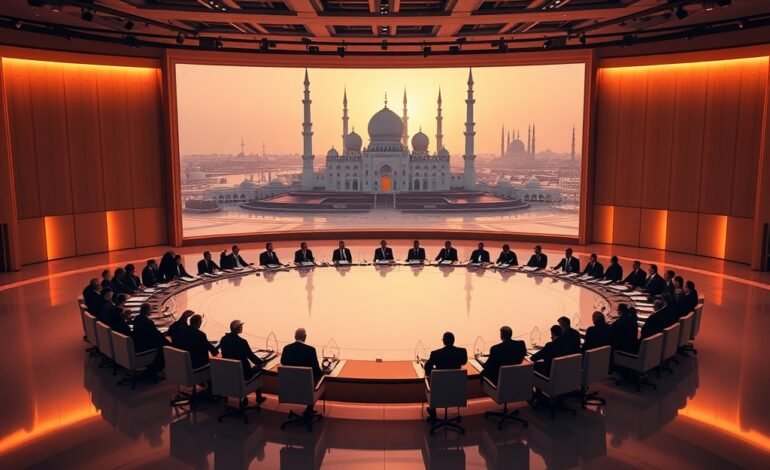

Abu Dhabi, United Arab Emirates – 17 January 2026 – The United Arab Emirates will host the next edition of the World Governments Summit (WGS) from 3 to 5 February 2026. Organisers project participation by more than thirty‑five heads of state, representatives from roughly 150 sovereign governments and upwards of five hundred cabinet‑level ministers.
A summit that has outgrown its origins
Launched in 2013 as a modest forum for public‑sector dialogue, the WGS has become a cornerstone of the international policy calendar. It now attracts senior officials, academics, private‑sector leaders and civil‑society representatives. The summit’s “WGS Charter” – a set of best‑practice guidelines – is widely referenced by emerging economies and established powers alike.
Record‑breaking attendance: why it matters
The 2026 roster eclipses previous editions. Over thirty‑five heads of state – including leaders from the United States, the European Union, China, India, Brazil and numerous African and Middle‑Eastern nations – will attend. Delegates from 150 distinct national administrations and more than five hundred ministers spanning finance, health, education, technology and foreign affairs will converge in Abu Dhabi.
Thematic focus – “Shaping the Future of Governance”
The summit’s theme frames a forward‑looking agenda across four pillar tracks:
- Digital Governance and Data Trust – Cross‑border data flows, AI ethics and privacy‑respecting digital public services.
- Sustainable Development and Climate Action – Alignment with the UN SDGs and the Paris Agreement, emphasizing green‑infrastructure financing.
- Health Systems Resilience – Interoperable health‑information systems and coordinated pandemic‑response mechanisms.
- Economic Inclusion and Social Cohesion – Inclusive fiscal policies, digital‑economy skills development and adaptable social safety nets.
Outcomes are expected to include policy briefs, a post‑summit declaration for the United Nations and G20, and the launch of a “Governance Innovation Lab” to pilot experimental policy tools in partner cities.
The UAE’s strategic role
Hosting the summit aligns with the UAE’s ambition to be a hub for knowledge‑based diplomacy. Recent investments in smart‑city projects (e.g., Masdar City), renewable energy and a fintech‑friendly regulatory environment showcase the Emirates’ transition toward a post‑oil economy. Emirati leaders emphasize “policy entrepreneurship,” urging governments to experiment with new service‑delivery models rather than merely copying best practices.
Potential geopolitical reverberations
The gathering offers a rare venue for informal dialogue among rival powers. The simultaneous presence of senior U.S. and Chinese officials could foster back‑channel talks on technology standards and supply‑chain resilience. A strong showing by African and Latin American leaders underscores the growing influence of the Global South on climate finance, debt sustainability and equitable technology access.
Economic and commercial implications
Beyond policy, the summit is projected to boost the UAE’s hospitality sector and provide Emirati firms—particularly in renewable energy, cybersecurity and smart infrastructure—with a platform to secure multi‑billion‑dollar contracts through business‑to‑government matchmaking sessions scheduled for day two.
Looking ahead: measuring impact
Observers will gauge success by three key deliverables:
- Adoption of a unified data‑governance framework endorsed by a majority of participating nations.
- Commitments to a joint financing mechanism for climate‑resilient infrastructure, building on green‑bond markets.
- Launch of at least three pilot projects under the Governance Innovation Lab with clear timelines and measurable indicators.
Conclusion
The World Governments Summit 2026 in Abu Dhabi represents a watershed moment for global governance. By convening an unprecedented array of heads of state, ministers and senior officials, the summit aims to move beyond symbolism toward concrete, collaborative actions on digital transformation, climate urgency, health security and inclusive growth. The UAE’s role as host underscores its ambition to catalyze this transformation and to showcase a model of coordinated, forward‑thinking governance for the decade ahead.
