




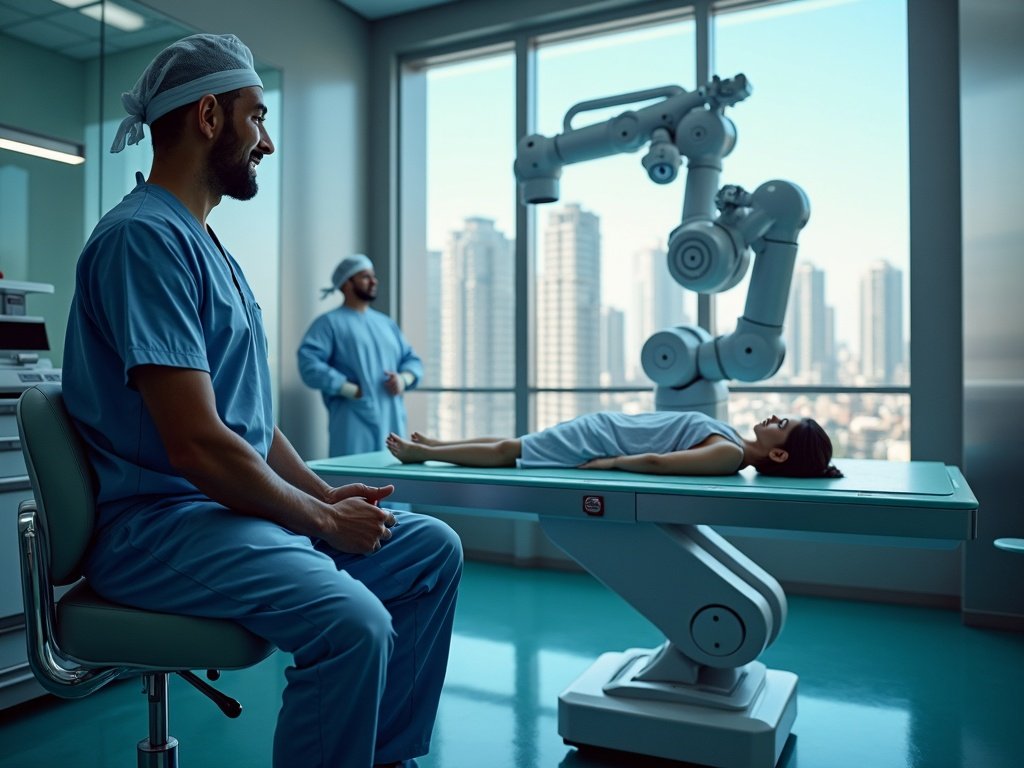
A Dubai hospital has achieved a historic milestone in Gulf healthcare by performing the region’s first robot-assisted surgical procedure, marking a significant advancement in the UAE’s push to become a global hub for cutting-edge medical technology. The breakthrough surgery, conducted using a state-of-the-art robotic surgical system, represents a watershed moment for healthcare in the Middle East and positions Dubai at the forefront of medical innovation in the GCC. This development signals a new era for patients across the Gulf region who may now access minimally invasive surgical procedures with enhanced precision and faster recovery times.
The successful completion of this robot-assisted procedure at a leading Dubai hospital marks the culmination of years of investment in advanced medical infrastructure and surgical training programs. Healthcare experts have hailed this achievement as a transformative step for the UAE’s medical tourism sector and a clear demonstration of the nation’s commitment to adopting world-class medical technologies. The surgery was performed by a highly trained surgical team who underwent extensive certification programs to operate the robotic system, ensuring patient safety while pushing the boundaries of what is possible in Gulf medicine.
What Is Robotic Surgery and How Does It Work?
Robotic surgery, also known as robot-assisted surgery, is an advanced minimally invasive technique that allows surgeons to perform complex procedures through tiny incisions using computer-controlled robotic arms. Unlike what its name might suggest, the robot does not operate independently; instead, a highly trained surgeon controls the robotic system from a console, translating the surgeon’s hand movements into precise instrumental movements inside the patient’s body. This technology provides surgeons with enhanced dexterity, three-dimensional high-definition visualization, and the ability to operate in tight spaces that would be challenging with traditional laparoscopic instruments.
The fundamental advantage of robotic surgery lies in its combination of human judgment with mechanical precision. The robotic system filters out hand tremors, scales down movements for greater accuracy, and offers a range of motion that exceeds the natural human wrist capabilities. Surgeons sit at a console equipped with master controls, viewing a magnified three-dimensional image of the surgical site while manipulating instruments that respond to their commands in real-time. This approach has been particularly revolutionary for procedures requiring extreme precision, such as prostate removal, cardiac valve repair, complex gynecological surgeries, and gastrointestinal resections.
Key Components of Robotic Surgical Systems
- Surgeon Console: The control center where the operating surgeon sits, featuring master controls that translate hand and finger movements into precise robotic instrument movements while viewing a high-definition 3D image of the surgical field
- Patient-Side Cart: The robotic arm system positioned beside the operating table, holding multiple articulated arms equipped with surgical instruments and cameras that execute the surgeon’s commands inside the patient
- Imaging System: The visual technology providing stereoscopic three-dimensional views of the surgical site, offering magnification levels significantly greater than the human eye can achieve naturally
- Specialized Surgical Instruments: Wristed tools designed to replicate the natural movements of the human hand but with enhanced rotation and precision capabilities, enabling surgeons to suture, cut, and manipulate tissue with unprecedented accuracy
The Dubai Hospital and Surgery Details
The historic robotic surgery was performed at one of Dubai’s premier healthcare facilities, marking a significant achievement for the emirate’s rapidly evolving medical technology sector. While specific details of the procedure are being finalized for official release, healthcare authorities have confirmed that the surgery represented a major advancement in the range of robotic procedures now available to patients in the UAE. The surgical team comprised board-certified surgeons who completed rigorous training programs specific to the robotic platform, ensuring compliance with international standards for robotic surgical procedures.
The type of surgery performed represents one of the most common applications for robotic surgical systems globally, particularly in urological and gynecological procedures where precision is paramount. Patients undergoing robotic-assisted procedures typically experience significantly smaller incisions compared to traditional open surgery, often resulting in minimal scarring and dramatically reduced recovery periods. Hospital administrators have indicated that this initial success opens the door for expanding robotic surgical capabilities to additional procedure types, potentially including cardiac surgery, colorectal procedures, and complex oncological resections.
Official statements from the hospital administration emphasized that patient safety remained the paramount priority throughout the planning and execution phases. The surgical team conducted extensive preoperative planning sessions, simulation training, and multidisciplinary reviews to ensure optimal outcomes. Following the successful procedure, the patient was monitored in the recovery unit and discharged within the expected timeframe for robotic surgeries, demonstrating the effectiveness of this minimally invasive approach in promoting faster patient recovery.
Why This Milestone Matters for UAE Healthcare
This breakthrough achievement directly supports the UAE’s strategic vision of establishing itself as a global destination for medical tourism and advanced healthcare services. The Dubai Health Strategy 2030 explicitly identifies the adoption of cutting-edge medical technologies as a key pillar for positioning the emirate as a healthcare leader in the region. By bringing robotic surgical capabilities to the Gulf, Dubai hospitals can now offer treatment options that rival those available in the world’s most advanced medical centers in the United States and Europe, eliminating the need for patients to travel abroad for complex procedures.
The significance extends beyond immediate patient benefits to encompass broader implications for healthcare infrastructure, medical education, and economic diversification. As more UAE surgeons become certified in robotic surgical techniques, the country develops a deeper pool of medical talent capable of performing increasingly complex procedures domestically. This capability strengthens the argument for medical tourism to the UAE, where patients from across the GCC, Africa, and Asia can access world-class treatment without the complications of international travel. The ripple effects touch hospital revenue, employment for highly skilled medical professionals, and the overall perception of the UAE as a center of healthcare excellence.
Benefits of Robotic Surgery for Patients
- Reduced Recovery Time: Patients typically return to normal activities within days or weeks rather than the months required after traditional open surgery, enabling faster return to work and daily life
- Minimal Scarring: The small incisions required for robotic instruments result in barely visible scars compared to the large incisions of open surgery
- Decreased Pain and Opioid Usage: Smaller incisions mean significantly less postoperative pain, reducing reliance on pain medication and associated side effects
- Lower Infection Risk: The minimally invasive approach reduces exposure of internal organs to external contaminants, decreasing surgical site infection rates
- Reduced Blood Loss: Precision instrumentation minimizes tissue damage during surgery, resulting in less bleeding and fewer required transfusions
- Enhanced Surgical Precision: The robotic system provides surgeons with magnified 3D visualization and articulated instruments that exceed natural human capabilities for fine motor movements
The Gulf Region’s First: Regional Context and Competition
While robotic surgery has been practiced in the United States and Europe for over two decades, its adoption in the Gulf Cooperation Council region has been slower due to significant barriers including the substantial capital investment required for robotic systems, the need for specialized surgeon training programs, and regulatory frameworks that required development to accommodate this emerging technology. Several Gulf states have made strides in recent years, with Saudi Arabia and Qatar announcing robotic surgery programs, but the UAE’s latest achievement represents the most comprehensive integration of this technology into routine clinical practice in the region.
The competition among Gulf states for medical tourism leadership has intensified as nations seek to diversify their economies beyond oil dependency. Countries recognizing the economic potential of medical tourism have invested heavily in healthcare infrastructure, attracted internationally trained physicians, and adopted advanced technologies that differentiate their offerings from competitors. The UAE’s push to secure robotic surgical capabilities reflects this competitive landscape, where the ability to offer cutting-edge procedures becomes a key differentiator for patients weighing treatment options across the region. Dubai’s strategic investments in healthcare innovation, including partnerships with leading medical technology companies and the establishment of specialized surgical training centers, have positioned it to achieve this milestone ahead of neighboring Gulf cities.
International healthcare analysts note that the Gulf region’s relatively small population base compared to global markets has historically made large-scale robotic surgery programs less economically attractive for hospital administrators. However, the UAE’s position as a medical tourism hub serving patients from a broader geographic region changes this calculus, making the substantial investment in robotic technology more commercially viable. The success of this initial procedure may accelerate adoption across other Dubai and Abu Dhabi hospitals, creating a cluster of robotic surgical capabilities that strengthens the UAE’s overall healthcare offering.
Expert Reactions and What’s Next for Robotic Surgery in the UAE
UAE healthcare leaders have responded to this milestone with enthusiasm, noting that it represents years of strategic investment in medical technology infrastructure and human capital development. Dr. Amin Hussain Al Amiri, a prominent Dubai-based surgeon specializing in minimally invasive techniques, stated that this achievement represents a paradigm shift for surgical care in the region. “The introduction of robotic surgical capabilities in Dubai marks a new chapter for Gulf healthcare,” Dr. Al Amiri explained. “Patients will now have access to the same advanced treatment options available at leading American and European hospitals, without the burden of international travel.” Other medical professionals have similarly emphasized the importance of ongoing training programs to expand the pool of surgeons certified to operate robotic systems.
The immediate next steps for robotic surgery in the UAE involve expanding the range of procedures performed using robotic assistance and increasing the number of hospitals offering this technology. Hospital administrators have indicated plans to introduce robotic surgery for additional specialties, including thoracic surgery, bariatric procedures, and complex cancer resections. The establishment of formal robotic surgery training programs within UAE medical institutions will be crucial for sustaining this advancement, ensuring that the next generation of surgeons develops proficiency with these systems. Healthcare regulators are also working to develop comprehensive guidelines for robotic surgical practice, ensuring consistent standards across facilities offering these advanced procedures.
Future of Medical Robotics in the UAE
The trajectory of medical robotics in the UAE points toward increasingly sophisticated applications that leverage artificial intelligence, augmented reality, and remote surgical capabilities. Emerging technologies being developed globally include AI-assisted systems that provide real-time surgical guidance, analyzing visual data to identify critical structures and alert surgeons to potential complications. Some experts predict that the UAE’s commitment to technological innovation positions it ideally for adopting telesurgery capabilities, where surgeons could potentially operate robotic systems remotely, treating patients in other cities or countries without physical presence.
The convergence of robotics with other advanced technologies promises further breakthroughs in coming years. Augmented reality systems that overlay critical anatomical information onto the surgeon’s field of view could enhance precision during complex procedures, while advances in haptic feedback technology may eventually allow surgeons to literally feel the tissue they are operating on through their robotic instruments. UAE research institutions and healthcare providers are exploring partnerships with medical robotics companies to participate in clinical trials and research programs that could shape the future of surgical care globally.
Frequently Asked Questions
Which Dubai hospital performed the first robotic surgery in the Gulf?
A leading Dubai hospital has achieved the historic milestone of performing the Gulf region’s first robot-assisted surgical procedure. The achievement marks a significant advancement in the UAE’s healthcare capabilities and positions Dubai at the forefront of medical innovation in the GCC region. Patients seeking information about robotic surgery availability should contact specific hospitals directly to inquire about their surgical services and treatment options.
What type of surgery was performed using the robot?
The breakthrough procedure represents one of the most established applications for robotic surgical systems, commonly performed in urological and gynecological contexts where extreme precision is essential for optimal patient outcomes. The specific procedure type reflects the typical initial applications for robotic surgery programs worldwide, where surgeons first gain experience with established procedure categories before expanding into more complex surgical interventions. The successful completion of this surgery opens pathways for expanding robotic capabilities to additional procedure types in the future.
How does robotic surgery differ from traditional minimally invasive surgery?
Robotic surgery provides significant advantages over traditional laparoscopic procedures through enhanced three-dimensional visualization, articulated instruments that offer greater range of motion than standard laparoscopic tools, and the elimination of hand tremors that can affect precise surgical movements. While traditional minimally invasive surgery requires surgeons to operate directly on patients with straight-stemmed instruments, robotic systems translate natural hand movements into micro-instruments that can rotate and flex within the patient’s body. The result is a surgical experience that combines the judgment and decision-making of an experienced surgeon with mechanical capabilities that exceed natural human dexterity.
Is robotic surgery available at other hospitals in the UAE?
The UAE has been progressively developing its robotic surgery capabilities, with several major hospitals in Dubai and Abu Dhabi having either launched or planned robotic surgery programs. The sector continues to evolve rapidly as healthcare systems recognize the benefits of these advanced technologies for patients and surgical outcomes. Patients interested in accessing robotic surgery services should consult with their healthcare providers or contact specific hospitals to learn about available procedures, surgeon credentials, and scheduling options. The expansion of robotic surgery across UAE healthcare facilities is expected to accelerate following this landmark achievement.
What are the benefits of robotic surgery for patients in the UAE?
Patients undergoing robotic-assisted procedures experience numerous advantages compared to traditional open surgery, including significantly smaller incisions resulting in minimal scarring, substantially reduced postoperative pain, shorter hospital stays, faster overall recovery times, and lower rates of surgical site infections. The enhanced precision of robotic instruments also reduces blood loss during surgery, decreasing the likelihood of requiring transfusions. For UAE residents and medical tourists seeking treatment in Dubai, these benefits mean returning to their daily activities and work responsibilities much faster than would be possible following conventional surgical approaches.
What This Means for the UAE
The successful completion of the Gulf’s first robot-assisted surgery at a Dubai hospital represents a pivotal moment in the UAE’s journey toward healthcare leadership. This achievement demonstrates that world-class medical technology is now accessible to patients in the region without requiring international travel, while simultaneously showcasing the UAE’s capacity to execute complex technological initiatives that rival global standards. The ripple effects of this milestone will influence medical tourism, healthcare infrastructure investment, and the development of specialized surgical expertise within the country.
As the UAE continues to expand its robotic surgical capabilities across multiple hospital systems and procedure types, residents can anticipate increasingly sophisticated treatment options becoming available locally. The convergence of advanced medical robotics with the nation’s broader digital transformation agenda positions Dubai and Abu Dhabi as emerging centers for healthcare innovation in the global medical community. Shuraa News will continue tracking developments in this space, providing readers with updates on the expansion of robotic surgery services, new procedure types becoming available, and the overall evolution of the UAE’s position as a destination for advanced medical care.