




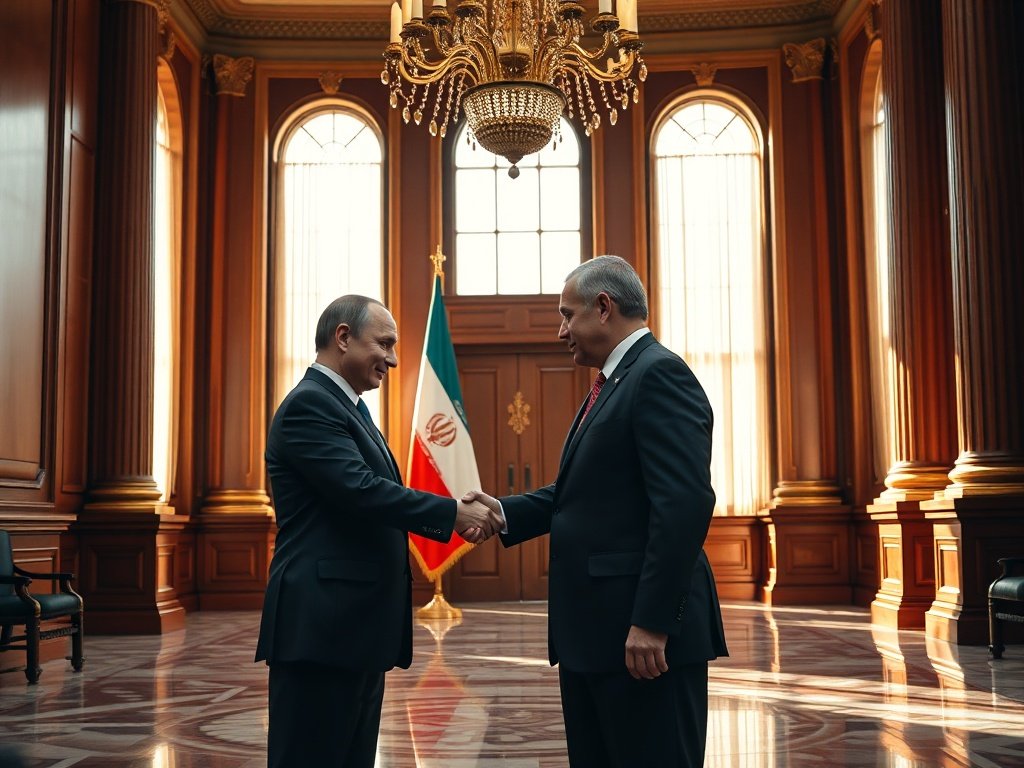
Moscow, Jan 30 2026 — President Vladimir Putin received Ali Larijani, secretary of Iran’s Supreme National Security Council, for a closed‑door meeting at the Kremlin. The Kremlin confirmed the encounter, while the Iranian embassy said the talks covered “economic ties and important regional and international issues.” The meeting comes as Washington steps up diplomatic and military pressure on Tehran over its nuclear and missile programmes.
The Immediate Diplomatic Backdrop
Understanding the meeting requires a look at recent escalations. In late December 2025, Iran cracked down on protests sparked by soaring inflation, unemployment and a devalued rial. Independent monitors estimate more than 6,000 demonstrators were killed. Tehran framed the repression as a “terrorist operation” orchestrated by the United States and Israel, reinforcing its demand that any negotiations respect Iranian sovereignty.
Across the Atlantic, President Donald Trump—back in office since 2025—has taken a confrontational stance. During a Jan 29 Oval Office briefing, Trump said Iran is “eager to strike a deal” on its nuclear programme but warned that a U.S. carrier strike group, which he described as a “large armada, flotilla, call it whatever you want,” was already moving toward the Persian Gulf. He hinted at a deadline for Tehran to engage, without revealing the exact date.
Trump’s rhetoric mirrors his first‑term approach: pairing diplomatic overtures with explicit threats of force. He cited Iran’s recent pause on executions of protestors as evidence of Tehran’s willingness to negotiate, while Iranian officials repeatedly insisted that their ballistic‑missile arsenal is “never” negotiable.
Russia’s Role as a Potential Mediator
Moscow’s invitation to Larijani, announced only after the fact, signals Russia’s desire to act as a broker between Washington and Tehran. Since the war in Ukraine began, Iran has become one of Russia’s most reliable strategic partners, providing diplomatic cover and reportedly supplying military hardware that evades Western sanctions. In return, Russia enjoys Tehran’s support in United Nations votes and gains a foothold in the Middle East that counters U.S. influence.
The Kremlin described the meeting as “unplanned,” highlighting Moscow’s flexibility. By offering mediation, Russia hopes to cement its status as an indispensable third party in any future nuclear‑negotiation framework—a role it has cultivated since the 2015 JCPOA collapsed. Analysts suggest the overture also aims to prevent a U.S. military operation that could destabilise the region and draw Russian forces into a broader confrontation.
The United States’ Negotiating Parameters
According to Axios, U.S. officials have outlined three non‑negotiable conditions for any prospective agreement:
- Cap on Iran’s long‑range ballistic‑missile inventory – Washington views missiles as a delivery system for potential nuclear warheads.
- Complete removal of enriched uranium from Iranian facilities, effectively ending the capacity to produce weapons‑grade material.
- Prohibition on independent enrichment, forcing Tehran to rely on the International Atomic Energy Agency and multinational oversight.
These demands echo the core provisions of the original JCPOA but add a stricter stance on missile capabilities—a “red line” for Iran. Serhan Afacan, director of the Ankara‑based Centre for Iranian Studies, warned that binding the nuclear issue to broader security concerns “is likely to be impossible,” given the centrality of the missile programme to Iran’s defensive doctrine.
Turkey’s Diplomatic Juggling Act
Ankara is positioning itself as a facilitator. Turkish Foreign Minister Hakan Fidan, speaking with Iran’s foreign minister Abbas Araghchi in Istanbul, called reviving nuclear talks “vital for reducing regional tensions.” Fidan accused Israel of lobbying the United States for a pre‑emptive strike against Iran and urged Washington to exercise “restraint and common sense.”
Araghchi reiterated Tehran’s willingness to negotiate “on an equal footing, based on mutual interests and mutual respect,” but warned that Iran’s defensive and missile capabilities “will never be subject to negotiation.” He added that no direct talks with U.S. officials are planned, underscoring Tehran’s preference for a multilateral framework that includes regional actors.
President Recep Tayyip Erdogan spoke by telephone with Iranian Prime Minister Masoud Pezeshkian, offering Turkey’s “facilitating role” to de‑escalate the crisis. Pezeshkian stressed that any breakthrough depends on the “goodwill of the parties involved and the abandonment of belligerent and threatening actions in the region.”
Regional and Global Implications
United States
A successful mediation that includes missile limits could avert a costly military campaign while preserving the credibility of Washington’s non‑proliferation agenda. Failure might force the deployment of the carrier group, raising the spectre of open conflict in the Strait of Hormuz.
Russia
Visible involvement in brokering a deal would deepen Moscow’s influence in the Middle East and provide a diplomatic counterweight to U.S. pressure. It could also give Russia leverage to seek concessions on sanctions or security guarantees related to its actions in Ukraine.
Iran
Easing economic sanctions through a nuclear settlement is tempered by Tehran’s determination to retain an autonomous missile deterrent. Leveraging its partnership with Russia—and Turkey’s mediation—could enable Iran to secure a more favourable arrangement than a U.S.–only offer.
Turkey
Acting as a bridge enhances Ankara’s stature as a regional power broker but risks alienating either side if negotiations stall, especially given Israel’s vocal opposition to any perceived leniency toward Tehran.
Broader Middle East
A de‑escalation would likely reduce the immediate risk of a wider conflagration, yet the underlying contest for influence among the United States, Russia and regional powers would persist. The fate of Iran’s missile programme will continue to shape security calculations for Israel, Saudi Arabia and the Gulf states.
Looking Ahead
The Kremlin’s discreet meeting with Ali Larijani marks a new episode in a diplomatic saga spanning more than a decade. While the exact substance of the discussions remains undisclosed, the convergence of Russian willingness to mediate, Turkish facilitation, and U.S. pressure—both diplomatic and military—suggests the coming weeks will be decisive.
For now, the world watches a delicate balancing act: Washington’s carrier group advances, Tehran signals both openness to talks and an unyielding stance on missile capabilities, and Moscow quietly offers a middle path that could either bridge the divide or deepen strategic fault lines. The outcome will shape Iran’s nuclear ambitions and recalibrate power dynamics among the United States, Russia and emerging diplomatic actors in the Middle East.