IMF and New Media Academy Launch Dubai Workshop to Transform Economic Reporting for Social Media

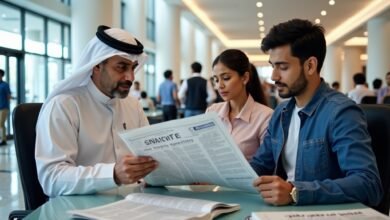
Dubai has become the epicenter of a new wave in financial storytelling after the International Monetary Fund (IMF) partnered with the New Media Academy to host a two‑day workshop titled “Economic and Social Media Content Creation Skills and the Impact of AI on Media.” The event, held at the state‑of‑the‑art Creators HQ, gathered journalists, digital creators, and policy experts from across the Middle East and North Africa (MENA) to learn how to turn complex macro‑economic data into bite‑sized, shareable content for platforms such as TikTok, Snapchat, and Instagram Reels.
Why the IMF Is Investing in Influencer‑Style Economic Communication
For more than a decade the IMF’s communications strategy has shifted from traditional press releases toward a broader “media engagement” model. Dr. Abdoul Aziz Wane, Director of the IMF Regional Office in Riyadh, explained that the Fund recognizes a growing “appetite for clear, people‑centred economic narratives” among the region’s digitally native audiences. “Our challenge is to convey the substance of fiscal reforms, monetary policy, and development strategies without drowning the audience in jargon,” he said.
By collaborating with the New Media Academy—a training institution that has cultivated a network of digital storytellers across the Arab world—the IMF aims to create a cadre of creators who can serve as bridges between technical analysis and everyday understanding. The workshop therefore represents a concrete step toward amplifying IMF research through the algorithms that now dominate news consumption.
The Strategic Choice of Creators HQ as the Workshop Venue
Creators HQ, operated by Visioneers Group, is a purpose‑built hub for content producers that offers high‑tech studios, post‑production suites, and mentorship programmes. Selecting this venue signaled the IMF’s intent to embed the training within an ecosystem already supportive of high‑quality digital output. Ahmed Basyouni, Digital Content and Talent Development Expert at the New Media Academy, noted, “When journalists walk into a space where influencers are already crafting viral clips, the cross‑pollination of ideas happens organically.”
Key Speakers and Their Contributions
- Wafa Amr, Senior Communications Officer, IMF – Opened the workshop with a briefing on how the Fund’s AI research can inform public discourse on automation, labor markets, and inclusive growth.
- Dr. Sami Ben Naceur, Director, IMF Middle East Centre for Economics and Finance – Delivered a deep‑dive into regional macro‑economic challenges, from oil price volatility to sovereign debt sustainability, and showed how to frame these topics for a non‑technical audience.
- Alaa Saleh, Director, SRMG Academy – Shared best practices for maintaining editorial independence while collaborating with corporate sponsors, a concern that resonates in markets where media ownership is often intertwined with business interests.
- Nour Ammache, Senior Presenter, Asharq Bloomberg – Demonstrated live how to structure a short video segment that explains concepts such as inflation targeting in under two minutes.
- Hussein Al Atoli, Director, New Media Academy – Contextualized the session within broader generational trends, emphasizing the role of Generation Z as both consumers and producers of economic content.
Curriculum Overview: From Economic Theory to TikTok‑Ready Content
The workshop’s agenda revolved around three pillars designed to equip participants with both the knowledge and the tools needed for modern economic journalism.
1. Economic Literacy for the Digital Age
Attendees tackled core concepts such as fiscal multipliers, balance‑of‑payments crises, and the implications of monetary tightening. The focus was on translating these ideas into analogies and visual metaphors that resonate on platforms limited to 60‑second clips. Participants practiced scripting concise explanations, using infographics, and employing motion graphics to illustrate, for example, how a change in interest rates can affect mortgage payments.
2. AI‑Enabled Storytelling
Sessions explored generative AI tools that can accelerate research, generate data visualisations, and draft script outlines. While AI can dramatically reduce production time, presenters warned against over‑reliance on automation. “Human verification remains essential to avoid the spread of misinformation,” emphasized Dr. Wane, referencing the IMF’s own research on AI governance.
3. Influencer Ethics and Audience Engagement
Given the rise of micro‑influencers with niche followings, the curriculum addressed disclosure standards, the balance between sponsorship and editorial integrity, and strategies for building trust with skeptical viewers. Participants debated real‑world case studies where undisclosed sponsorship led to audience backlash, reinforcing the importance of transparency.
Hands‑On Exercise: Crafting a TikTok Explainer on Rising Food Prices
One of the most dynamic moments of the workshop came when mixed teams—journalists paired with social‑media creators—were tasked with producing a mock TikTok explainer on the impact of rising food prices on household budgets. The resulting clips were judged on clarity, factual accuracy, and creative flair. A winning entry used a simple animation of a grocery basket, overlaid with a voice‑over that broke down inflation dynamics in a relatable, 45‑second narrative.
Why Targeting Generation Z Matters for Economic Communication
Generation Z now accounts for an estimated 25‑35 % of all global social‑media users, and in the MENA region this cohort is especially active on visual platforms such as TikTok and Snapchat. According to Al Atoli, the purchasing power of Gen Z is projected to reach $12.6 trillion annually by 2030. This figure is not merely a statistic; it represents a market that brands are eager to tap through creator‑driven advertising.
Media outlets that can deliver credible economic content in a format that aligns with Gen Z’s consumption habits stand to capture both audience share and advertising revenue. “The challenge—and the opportunity—lies in making macro‑economics relevant to a generation that measures success in terms of personal financial autonomy and social impact,” Al Atoli explained. “If we can help them understand, for instance, how central bank decisions affect mortgage rates or job prospects, we empower them to make better‑informed choices.”
Policy Implications: Amplifying IMF Research Through Digital Creators
The workshop’s outcomes extend beyond journalism. By fostering a network of creators who can accurately interpret IMF reports, the Fund gains a de‑facto amplification channel that bypasses traditional gatekeepers. This could prove vital in contexts where public trust in institutions is fragile. Moreover, the integration of AI tools into the content creation pipeline offers a double‑edged sword: while generative models can accelerate data analysis and visualisation, they also pose risks of amplifying biases or propagating errors if not rigorously supervised.
Embedding the IMF’s AI‑governance research into the training underscored the need for responsible deployment, ensuring that digital storytellers remain vigilant against the spread of inaccurate economic narratives.
Future Plans: Scaling the Training Model Across the MENA Region
Both institutions signaled that the Dubai workshop is only the beginning of a longer partnership. Dr. Wane indicated that the IMF Regional Office in Riyadh intends to roll out a series of follow‑up webinars and mentorship programmes targeting media outlets in smaller markets such as Sudan, Yemen, and Mauritania. The New Media Academy, for its part, plans to develop a certification track that will formally recognise journalists and creators who have mastered the “economic‑communication” skill set. Graduates will gain access to a repository of IMF data visualisations, pre‑approved sound bites, and a network of peer reviewers.
“Effective communication of economic policy is a public good,” said Wafa Amr, IMF Senior Communications Officer. “When the stories we tell are clear, accurate, and resonant, we help societies navigate uncertainty and build consensus around the reforms that drive inclusive growth.”
Conclusion: Bridging Numbers and Narratives in a Short‑Form Media Landscape
In an era where attention spans are measured in seconds and the credibility of information is constantly contested, the convergence of policy expertise, digital creativity, and artificial intelligence may be the most promising avenue for fostering an economically informed citizenry. The Dubai workshop demonstrated that, when equipped with the right tools and ethical frameworks, journalists and influencers can transform dense fiscal data into compelling narratives that speak directly to the concerns of young people.
As the MENA region grapples with post‑pandemic recovery, climate‑related fiscal pressures, and the ongoing digital transformation of its economies, the ability to convey these challenges—and the solutions—through accessible media could prove decisive. The initiative spearheaded by the IMF and the New Media Academy thus represents not merely a training exercise, but a strategic investment in the public’s capacity to understand, engage with, and ultimately shape the economic policies that affect their daily lives.