




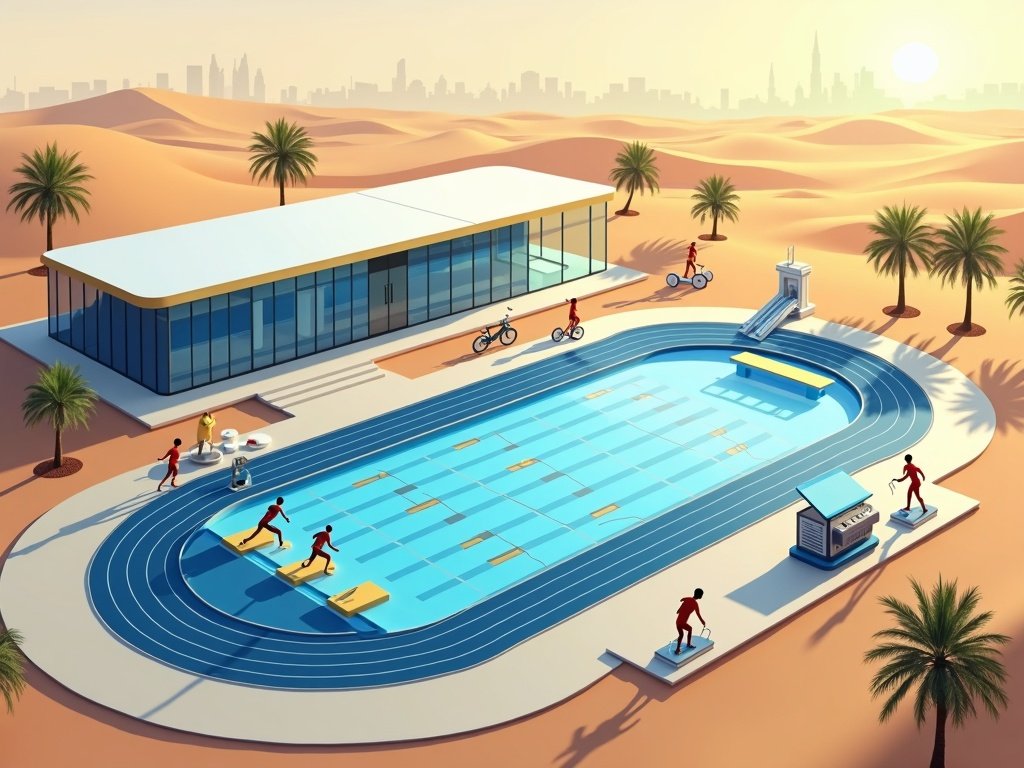
The UAE is on track to send its most competitive Olympic delegation yet to the 2028 Los Angeles Games. Following Sheikh Ahmed bin Mohammed bin Rashid Al Maktoum’s public commitment to elevating the nation’s sporting presence on the global stage, the UAE National Olympic Committee has launched a coordinated effort across training facilities, coaching networks, and youth development programs designed to deliver medal performances in California. This article examines the strategic infrastructure behind UAE Olympic training, from state-of-the-art facilities in Dubai and Abu Dhabi to specialized athlete pathways targeting athletics, swimming, judo, and shooting. The roadmap for 2028 is clear: identify talent early, train with world-class expertise, and compete with precision.
The Strategic Blueprint: UAE’s Olympic Vision for 2028 and Beyond
The UAE’s Olympic ambitions rest on a structured national framework led by the UAE National Olympic Committee and executed through coordinated action by Dubai Sports Council, Abu Dhabi Sports Council, and the Ministry of Culture and Youth. The UAE Sports Strategy 2030 sets quantifiable performance targets for international competition, including a top-20 finish in the Los Angeles 2028 Olympic medal table by target sports. Government funding for Olympic athlete preparation exceeded AED 500 million in the 2023-2024 cycle, with additional private sector investment through partnerships with Emirates, DP World, and Mubadala. The National Olympic Committee has committed to sending a minimum of 30 athletes to Los Angeles 2028, double the delegation size from Tokyo 2020, across priority sports where UAE athletes have demonstrated podium potential at Asian and World Championship level.
Key initiatives driving this vision include:
- The Olympic Excellence Scholarship Program, providing full funding for athletes in track and field, swimming, and combat sports to train abroad at facilities in the USA, Australia, and Great Britain
- Talent identification camps operating in all seven emirates, screening over 15,000 youth athletes annually through biometric testing and performance tracking
- A coaching exchange agreement with the International Olympic Committee’s Olympic Solidarity program, bringing elite coaches from traditional sports powers into UAE training centers for multi-year contracts
- Performance benchmarking aligned to World Athletics, World Aquatics, and International Judo Federation standards, ensuring athletes train to internationally recognized Olympic qualifying thresholds
Government Backing and National Policy Framework
Federal and emirate-level sports policy anchors Olympic training in national development objectives. The Ministry of Culture and Youth oversees grassroots sports participation programs required to feed athletes into the Olympic pathway. Dubai Sports Council operates under a mandate to produce Olympic-ready athletes through its network of high-performance academies, while Abu Dhabi Sports Council manages elite training for combat sports and athletics. The UAE government has integrated Olympic preparation into Vision 2030 documentation, positioning medal success as a demonstration of national capability. This policy alignment ensures long-term funding continuity and institutional support for athlete preparation beyond individual Olympic cycles.
World-Class Facilities: The Training Hubs Nurturing Champions
UAE Olympic athletes train at facilities built to international Olympic Committee specifications. The Mohammed bin Rashid Al Maktoum Creative Sports Centre in Dubai houses dedicated training zones for athletics, swimming, and judo, complete with biomechanics labs, altitude simulation chambers, and hydrotherapy recovery pools. Abu Dhabi’s Zayed Sports City complex operates a 50-meter Olympic pool used by national team swimmers and a track and field facility where sprinters and field athletes train under conditions matching the Los Angeles Memorial Coliseum. Dubai Sports City provides cycling velodromes and shooting ranges certified by the International Shooting Sport Federation. Each facility employs sports scientists who monitor athlete performance through wearable technology tracking heart rate variability, oxygen uptake, and neuromuscular fatigue.
Key training facilities include:
- Mohammed bin Rashid Al Maktoum Creative Sports Centre, Dubai: athletics, swimming, judo, and physiotherapy units
- Zayed Sports City, Abu Dhabi: Olympic pool, athletics track, combat sports halls
- Dubai Sports City: velodrome, shooting range, football pitches
- Al Ain Sports Complex: endurance training center with altitude chambers
- Hamdan Sports Complex, Dubai: gymnastics, weightlifting, and Paralympic sports facilities
Dubai’s High-Performance Academies: A Closer Look
Dubai operates specialist academies designed to accelerate Olympic preparation. The Dubai Duty Free Tennis Academy has partnered with the UAE National Olympic Committee to develop a multi-sport training model used for Olympic sports. The swimming academy at Hamdan Sports Complex has produced national record holders in freestyle and butterfly events who are now training for Olympic qualifying times. The cycling academy at Dubai Sports City trains track cyclists on equipment identical to that used in Los Angeles 2028 velodrome events. Athletes at these academies train six days per week under periodized programs designed by coaches recruited from Australian Institute of Sport and UK Sport.
Elite Coaching and International Expertise
The UAE has recruited Olympic-level coaching talent from the USA, Great Britain, Australia, and Kenya. These coaches bring direct experience preparing athletes for podium finishes at Rio 2016, Tokyo 2020, and Paris 2024. The UAE National Olympic Committee operates knowledge transfer agreements with British Athletics, Athletics Australia, and USA Swimming, enabling UAE coaches to shadow their international counterparts during Olympic preparation cycles. International coaches under contract to UAE sports councils include former Olympic medalists who train UAE swimmers in stroke efficiency and endurance specialists who design altitude training blocks for distance runners. These coaches work alongside Emirati sports scientists to integrate local knowledge of climate adaptation with global best practice in periodization and recovery.
Sports Science and Innovation in Training Regimens
UAE Olympic athletes benefit from sports science protocols matching those used by top-tier Olympic teams globally. Key elements of the scientific approach include:
- Individualized nutrition planning developed with dietitians from Aspetar Orthopedic and Sports Medicine Hospital, ensuring athletes meet energy and micronutrient targets for training volume
- Psychology support delivered by sports psychologists trained in cognitive-behavioral techniques for competition stress management and mental resilience
- Injury prevention protocols using movement screening technology to identify biomechanical risk factors before they lead to overuse injuries
- Data analytics platforms tracking training load, recovery metrics, and performance trends across monthly microcycles, allowing coaches to adjust intensity in real time
- Cryotherapy and hydrotherapy recovery sessions scheduled within 90 minutes of high-intensity training to reduce inflammation and accelerate adaptation
This integration of science into coaching ensures every training session moves athletes closer to Olympic qualifying standards with minimized injury risk.
Targeted Sports and Athlete Pathway Programs
The UAE’s Olympic medal strategy focuses on sports where athletes have demonstrated medal potential at Asian and World Championship level. These sports receive priority funding, coaching resources, and international competition exposure. The table below outlines the priority sports for Los Angeles 2028:
| Sport | Current Top Athlete | Training Center | 2028 Goal |
|---|---|---|---|
| Athletics (100m, 200m) | Hassan Al Nubi | Zayed Sports City, Abu Dhabi | Olympic final qualification |
| Swimming (50m freestyle) | Yousuf Al-Matrooshi | Hamdan Sports Complex, Dubai | Semifinal finish, sub-22 seconds |
| Judo (81kg) | Ivan Remarenco | Mohammed bin Rashid Creative Sports Centre | Medal contention |
| Shooting (10m air rifle) | Saif bin Futais | Dubai Sports City | Final qualification |
| Track Cycling (team sprint) | National team squad | Dubai Sports City velodrome | Top 8 finish |
| Paralympic Athletics (club throw) | Mohammed Khamis Khalaf | Al Ain Sports Complex | Gold medal defense |
Athletes progress through a clearly defined pathway from grassroots identification to Olympic competition. Schools across the UAE participate in annual sports testing coordinated by Dubai Sports Council and Abu Dhabi Sports Council. Athletes who meet performance benchmarks in speed, strength, or endurance receive invitations to regional training camps. Those who demonstrate Olympic potential join national teams with full scholarship support covering coaching, travel to international competitions, equipment, and sports science services. Current scholarship holders train at facilities in Dubai, Abu Dhabi, and Al Ain, with periodic training blocks abroad in Kenya for endurance athletes and the USA for sprinters and swimmers.
Grassroots to Podium: Youth Development Initiatives
The foundation of UAE Olympic success begins with youth engagement programs reaching students aged 8 to 16. The Dubai Fitness Challenge encourages participation in athletics, swimming, and team sports through school competitions held across November each year. Regional sports festivals organized by the Ministry of Culture and Youth expose young athletes to Olympic sports through coaching clinics led by national team athletes. The UAE National Olympic Committee partners with the International Olympic Committee’s Olympic Solidarity program to fund coaching education and talent identification camps in underserved communities. Scouts from national sports federations attend these festivals to identify athletes with physical attributes suited to Olympic disciplines. Athletes identified through this system receive invitations to join emirate-level training squads where they train twice weekly alongside current national team members.
Success Stories and Current Olympic Prospects
UAE athletes who have trained through the current Olympic pathway system are competing at World Championship and Asian Games level. Yousuf Al-Matrooshi set a UAE national record in the 50-meter freestyle with a time of 22.18 seconds at the 2024 World Aquatics Championships, moving within one second of Olympic semifinal qualification times. Hassan Al Nubi ran a personal best 10.17 seconds in the 100 meters at the 2025 Asian Athletics Championships, placing him in contention for a relay medal spot if he breaks the 10-second barrier by 2028. Ivan Remarenco won judo bronze at the 2024 World Judo Championships in the 81-kilogram category, demonstrating the technical skill required to compete for Olympic medals.
Paralympic athlete Mohammed Khamis Khalaf won gold in club throw F32 at the Tokyo 2020 Paralympics and trains daily at Al Ain Sports Complex under a coach recruited from Athletics Australia. His training program targets a throw exceeding 35 meters at Los Angeles 2028, which would secure gold if he maintains his current progression rate. Saif bin Futais qualified for the Olympic 10-meter air rifle final at Rio 2016 and continues to train at Dubai Sports City with a target of medaling in Los Angeles. These athletes follow individualized training plans designed by international coaches and supported by sports science teams tracking every aspect of preparation from sleep quality to competition-day nutrition.
Challenges and the Road to Los Angeles 2028
The UAE faces competition from nations with deeper Olympic traditions and larger athlete pools. Traditional sports powers like the USA, China, Great Britain, and Australia allocate significantly higher budgets to Olympic preparation and benefit from decades of institutional knowledge in athlete development. UAE athletes must compete for qualifying spots against rivals who train at altitude in Kenya or at purpose-built Olympic training centers in Colorado Springs and Canberra. The UAE climate presents additional training challenges, with summer temperatures exceeding 40 degrees Celsius requiring athletes to train indoors or during early morning hours when heat stress is minimized.
The UAE National Olympic Committee addresses these challenges through strategic international competition scheduling. Athletes compete at Diamond League athletics meets, World Cup shooting events, and Grand Slam judo tournaments to gain exposure to Olympic-level competition pressure. Training camps in cooler climates during UAE summer months allow athletes to maintain high training volumes without heat-related performance decline. Continuous program evaluation by sports scientists ensures training methods evolve based on performance data and international best practice. The road to Los Angeles 2028 depends on maintaining athlete health, hitting qualifying benchmarks at World Championships in 2027, and ensuring peak performance timing aligns with Olympic competition dates in July and August 2028.
Frequently Asked Questions
Which UAE athletes have won Olympic gold medals before?
The UAE has won one Olympic gold medal in its history. Ahmed Al Maktoum won gold in men’s double trap shooting at the 2004 Athens Olympics, the nation’s only gold medal to date in Olympic competition. The UAE has also won several Paralympic gold medals, including Mohammed Khamis Khalaf’s club throw gold at Tokyo 2020 and previous golds in powerlifting and athletics at earlier Paralympic Games. These successes demonstrate the UAE’s capability to produce Olympic-level athletes when supported by proper training infrastructure and coaching expertise.
How can my child join a UAE Olympic training program?
Parents can register children for talent identification programs through Dubai Sports Council, Abu Dhabi Sports Council, or local sports clubs affiliated with national sports federations. Schools across the UAE participate in annual sports testing events where coaches assess speed, strength, coordination, and endurance. Children who meet performance benchmarks receive invitations to join emirate-level training squads. Parents can also contact the UAE National Olympic Committee directly through their official website to inquire about upcoming talent identification camps. Athletes aged 8 to 16 with demonstrated ability in athletics, swimming, judo, or shooting should attend regional sports festivals where national team scouts identify potential Olympic pathway candidates.
What sports is the UAE focusing on for the 2028 Olympics?
The UAE prioritizes athletics, swimming, judo, shooting, and track cycling for the 2028 Los Angeles Olympics. These sports receive the highest funding allocations and coaching resources because UAE athletes have already demonstrated medal potential at Asian and World Championship level. Athletics focuses on sprint events and field disciplines where explosive power suits UAE athlete profiles. Swimming targets short-distance freestyle events. Judo concentrates on middleweight categories where current athletes compete internationally. Shooting emphasizes rifle and pistol disciplines with existing Olympic final experience. Track cycling develops team sprint squads capable of competing in velodrome events.
Where are the main Olympic training centers in the UAE?
The main Olympic training centers are the Mohammed bin Rashid Al Maktoum Creative Sports Centre in Dubai, Zayed Sports City in Abu Dhabi, Dubai Sports City, Al Ain Sports Complex, and Hamdan Sports Complex in Dubai. Each facility specializes in different Olympic sports. The Mohammed bin Rashid Al Maktoum Creative Sports Centre handles athletics, swimming, and judo. Zayed Sports City operates the Olympic pool and athletics track. Dubai Sports City manages the velodrome and shooting range. Al Ain Sports Complex trains endurance athletes and Paralympic sports. Hamdan Sports Complex focuses on swimming and gymnastics. Some facilities offer public access during non-training hours, while elite training zones remain restricted to national team athletes.
How is the UAE government funding Olympic athlete training?
The UAE government funds Olympic training through direct budget allocations from the Ministry of Culture and Youth, emirate-level sports councils, and the UAE National Olympic Committee. The 2023-2024 funding cycle exceeded AED 500 million. Additional funding comes from private sector partnerships with companies like Emirates, DP World, and Mubadala, which sponsor individual athletes and training programs. The International Olympic Committee’s Olympic Solidarity program provides grants for coaching education, international competition travel, and training camp expenses. This combination of government budget, private sponsorship, and international grants ensures athletes receive comprehensive financial support covering coaching, facilities, sports science, equipment, and competition costs.
Final Whistle
The UAE’s approach to training Olympic champions combines government commitment, world-class facilities, elite international coaching, and a structured athlete development pathway targeting measurable results at Los Angeles 2028. From talent identification in schools to daily training at facilities matching Olympic standards, every element of the system aims to produce podium performances. Athletes like Yousuf Al-Matrooshi, Hassan Al Nubi, and Mohammed Khamis Khalaf represent the tangible outcomes of this investment, competing at World Championship level and targeting Olympic finals.
The 2028 Los Angeles Olympics will test whether this strategic framework delivers the medal haul the UAE National Olympic Committee has set as its target. Success depends on athletes hitting qualifying times at 2027 World Championships, maintaining health through the final preparation phase, and executing under Olympic pressure. The UAE’s Olympic story is one of deliberate planning, substantial investment, and rising expectations.
Follow Shuraa News for the latest updates on UAE athletes, Olympic qualifiers, and in-depth sports analysis across the Emirates as the road to Los Angeles 2028 unfolds.