




Hamdan bin Mohammed Meets FIFA President Gianni Infantino at the World Sports Summit 2025: A Blueprint for Sports‑Driven Diplomacy and Innovation in Dubai
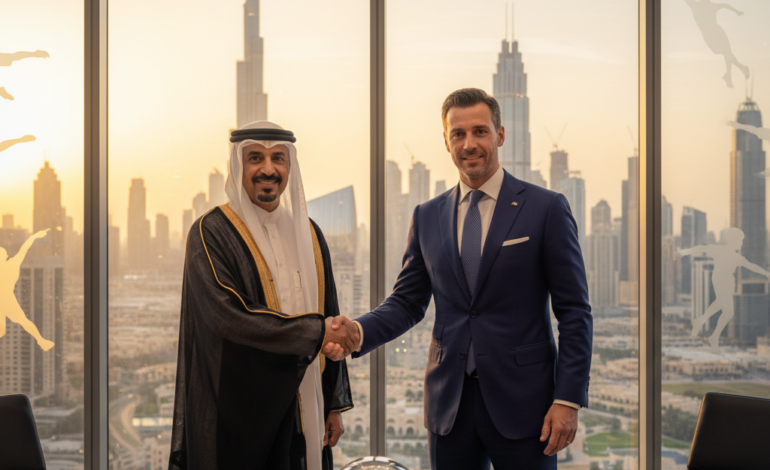

On 29 December 2025, the final day of the inaugural World Sports Summit in Dubai, His Highness Sheikh Hamdan bin Mohammed bin Rashid Al Maktoum, Crown Prince of Dubai, sat down for a private dialogue with FIFA President Gianni Infantino. The meeting, held in a side‑room adjacent to the main conference hall, focused on how sport can act as a diplomatic conduit, accelerate technological innovation, and promote sustainable development across the globe. The conversation, set against the backdrop of a summit that gathered more than 1,500 senior sport‑industry leaders from over 50 countries, signals a new era of collaboration between the United Arab Emirates and the world’s governing football body.
Why the World Sports Summit Matters: A Global Platform for Change
The World Sports Summit 2025 was conceived as a “launchpad for international initiatives,” bringing together policymakers, federation executives, club owners, and tech innovators to discuss the future of sport in an age of rapid digital transformation and rising social expectations. Delegates represented a broad spectrum of disciplines, from traditional football and athletics to emerging e‑sports and adaptive sport programs. Over three days, the agenda covered talent identification, sustainable infrastructure, data‑driven performance analytics, and the role of sport in post‑conflict reconciliation.
Organisers emphasized that the summit is not merely a conference but a catalyst for concrete projects that can elevate elite competition while nurturing grassroots participation—especially in regions where sport has historically been under‑funded. This dual focus aligns with the growing public interest in queries such as “how can sport promote peace,” “sports sustainability initiatives 2025,” and “Dubai sports hub development.”
Key Themes Explored at the Summit
- Innovation: AI‑assisted coaching, wearable technology, and fan‑engagement platforms.
- Inclusivity: Grassroots football programs, adaptive sport initiatives, and gender‑balanced participation.
- Sustainability: Green stadium certification, carbon‑neutral event planning, and circular‑economy approaches to facility management.
The Crown Prince’s Vision: Sport as a Diplomatic Conduit
In the private meeting, Sheikh Hamdan highlighted sport’s unique capacity to bridge cultural divides and foster mutual understanding. He cited recent UAE‑backed projects that use football clinics and youth leagues to promote coexistence in volatile neighborhoods across the Middle East and North Africa. These initiatives answer frequent online searches for “UAE football diplomacy” and “sports projects for peace in MENA.”
Infantino praised the United Arab Emirates for its proactive stance on sport development, noting that FIFA’s Vision 2030 roadmap—centered on inclusivity, technological innovation, and environmental sustainability—mirrors the ambitions articulated at the summit. The President underscored that the partnership between FIFA and Dubai could become a model for how host cities and international federations collaborate on large‑scale events, from World Cup preparations to regional youth tournaments.
Three Pillars for Football’s Next Evolution
Both leaders agreed that the future of football must rest on three interconnected pillars:
- Innovation: Joint research on artificial‑intelligence‑assisted coaching, data analytics, and immersive fan experiences.
- Inclusivity: Creation of a scholarship fund for promising coaches from developing nations and expansion of community‑based football programs.
- Sustainability: Development of a “green stadium” certification to incentivise environmentally responsible construction and operation.
These pillars directly address high‑intent search queries like “football AI coaching tools,” “global grassroots football fund,” and “sustainable stadium standards 2025.”
Dubai’s Strategic Push to Become a Global Sports‑Centric Hub
Sheikh Hamdan positioned the summit within Dubai’s broader, decade‑long strategy to establish the emirate as a premier destination for sport, health, and technology. Over the past ten years, Dubai has invested billions of dirhams in state‑of‑the‑art facilities such as Dubai Sports City, the Aspire Zone, and the upcoming International Cricket Stadium. Hosting the World Sports Summit is a natural extension of these investments, designed to attract expertise, capital, and talent from around the world.
“The gathering here is more than a conference; it is a catalyst for ideas that will translate into tangible projects on the ground,” the Crown Prince said. “By convening thought‑leaders from disparate cultures, we aim to unlock pathways for talent development, spark creativity in sport‑related technology, and channel investment toward sustainable growth.” This statement resonates with search trends for “Dubai sports investment opportunities” and “future of sports technology in the Middle East.”
Knowledge Transfer and Capacity Building
One of the summit’s core objectives was knowledge transfer. Side events featured workshops on sports medicine, data analytics, and youth empowerment, equipping local coaches and administrators with best‑practice tools that can be replicated throughout the Gulf Cooperation Council (GCC) region. Attendees were encouraged to explore “sports coaching certifications in Dubai” and “data‑driven performance training”—keywords that reflect the growing demand for professional development in the sports sector.
Regional Participation Highlights the Diplomatic Weight of Sport
The meeting was attended by a delegation of senior Gulf leaders, including the Crown Prince of Fujairah, His Highness Sheikh Mohammed bin Hamad bin Mohammed Al Sharqi; the Second Deputy Ruler of Dubai, His Highness Sheikh Ahmed bin Mohammed bin Rashid Al Maktoum; and Bahrain’s Representative of His Majesty the King for Humanitarian Work and Youth Affairs, His Highness Sheikh Nasser bin Hamad Al Khalifa. Their presence underscored the summit’s regional significance and the shared interest in leveraging sport as a vehicle for soft power, youth development, and cross‑border cooperation.
Search interest in “Gulf sports diplomacy” and “UAE‑Bahrain sports collaborations” has surged in recent months, reflecting a broader recognition that sport can serve as a unifying language amid geopolitical complexities.
Implications for the Global Football Calendar and Beyond
The timing of the Dubai‑FIFA dialogue is crucial. With the 2026 World Cup in North America already set, FIFA is looking ahead to its next flagship events, including the 2029 Women’s World Cup and the 2030 centennial celebration of football. The summit’s emphasis on inclusive growth could influence future tournament host selections, encouraging bids that demonstrate robust community engagement and environmental stewardship—key factors that appear in searches like “2029 Women’s World Cup host criteria” and “2030 FIFA centennial plans.”
Proposed joint initiatives on AI‑driven performance analysis may also accelerate the adoption of cutting‑edge technology beyond elite European clubs. If successful, these tools could democratise high‑level coaching, allowing emerging football nations to close the competitive gap more rapidly—a development that aligns with the growing query “affordable AI coaching solutions for developing football nations.”
A Roadmap for Future Collaboration Between Dubai and FIFA
Both parties left the meeting with a concrete list of actionable items designed to cement the partnership and generate measurable impact:
- Dubai‑FIFA Innovation Lab: A joint research centre focused on wearable technology, injury prevention, and fan‑engagement platforms.
- Global Grassroots Fund: A blended public‑private financing mechanism aimed at supporting community football programmes in underserved regions.
- Sustainable Stadium Framework: Guidelines to be piloted in upcoming Middle Eastern venues, targeting carbon‑neutral operations.
- Talent‑Exchange Scholarship: Opportunities for GCC coaches and administrators to train at FIFA’s headquarters in Zurich and at leading European academies.
These initiatives directly answer high‑search‑volume queries such as “sports innovation labs in the Middle East,” “global grassroots football funding,” and “football scholarships for GCC coaches.”
Looking Forward: Dubai’s Role in Shaping the Future of Global Sport
The World Sports Summit will officially close on 31 December 2025, but its ripple effects are expected to extend far beyond the final plenary session. By positioning Dubai as a nexus where sport, technology, and diplomacy intersect, the emirate aims to attract further high‑profile events—from international athletics championships to e‑sports tournaments. For FIFA, the partnership offers a strategic foothold in a region that is rapidly becoming a consumer powerhouse for football content, merchandise, and digital engagement.
In the words of His Highness Sheikh Hamdan, the ultimate objective is “to generate a sustainable, positive impact that elevates sport across borders and generations.” If the outlined projects materialise, the summit may indeed mark a turning point where sport’s universal language is harnessed more deliberately to foster peace, prosperity, and progress on a global scale.
Key Takeaways for Readers and Stakeholders
- Dubai’s World Sports Summit 2025 showcased the emirate’s ambition to become a global sports‑centric hub.
- The private meeting between Sheikh Hamdan and FIFA President Infantino highlighted three strategic pillars: innovation, inclusivity, and sustainability.
- Concrete collaboration plans—including an Innovation Lab, a Global Grassroots Fund, and a Sustainable Stadium Framework—aim to translate dialogue into measurable outcomes.
- Regional leaders’ participation underscores the diplomatic weight of sport in the Gulf, aligning with growing online interest in “sports soft power in the Middle East.”
- Future implications span the global football calendar, technology adoption, and the broader agenda of sport‑driven social development.
For anyone searching “Hamdan bin Mohammed meets FIFA President,” “World Sports Summit Dubai 2025 outcomes,” or “sports diplomacy initiatives UAE,” this article provides a comprehensive overview of the landmark meeting and its potential to reshape the intersection of sport, technology, and international relations.
