




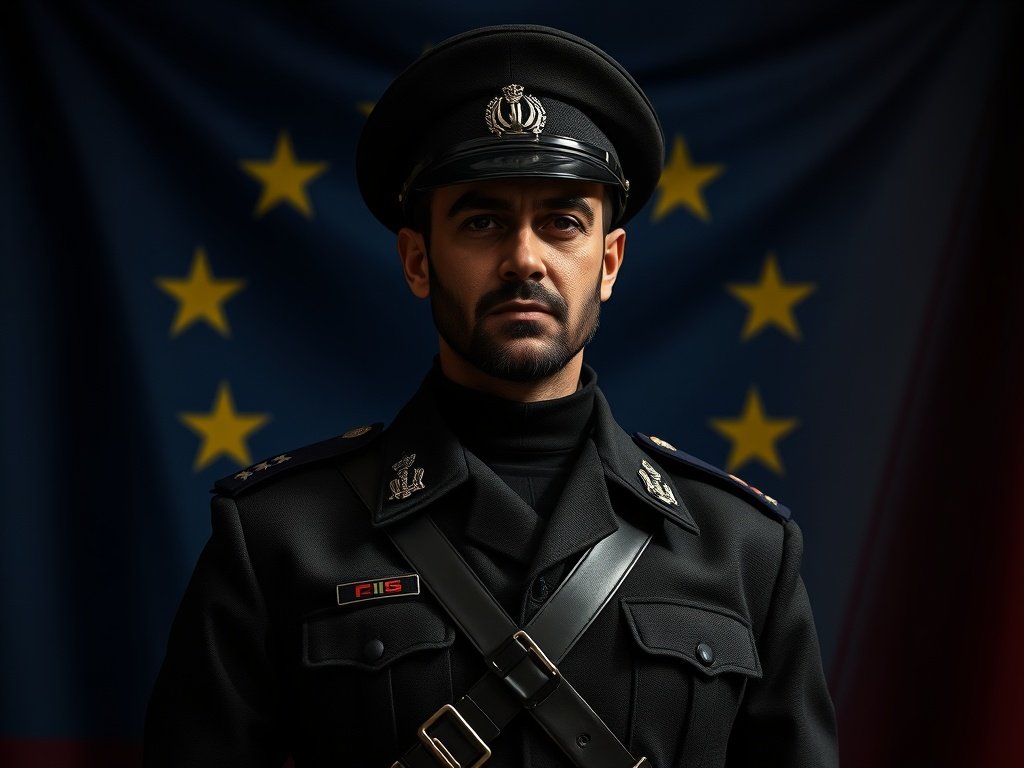
European foreign ministers gathered in Brussels at the end of January and formally added the Islamic Revolutionary Guard Corps (IRGC) to the European Union’s list of designated terrorist organisations. The move, while largely symbolic because senior IRGC commanders were already under sanctions, marks a pronounced hardening of Europe’s stance toward Tehran’s regional activities, its ballistic‑missile programme and the stalled nuclear talks.
From Revolutionary Guard to Global Power Broker
Created after the 1979 revolution to protect the new theocratic order, the IRGC now exceeds its original mandate. It answers directly to Iran’s Supreme Leader and commands a sprawling network that includes:
- Military branches – ground forces, navy, air force, the Quds Force (extraterritorial operations) and the Basij militia for internal security.
- Strategic weapons programmes – oversight of ballistic‑missile development and, through the Aerospace Force, Iran’s nascent nuclear weapons capability.
- Economic empire – front companies, construction firms, telecom providers and oil‑service enterprises that control an estimated 10‑15 % of Iran’s GDP.
These roles make the IRGC a pivotal actor in Iran’s internal politics and in the geopolitics of Syria, Lebanon, Yemen and Iraq, where it backs proxy forces.
The EU’s Legal Leap: From Sanctions to Terrorist Designation
Since 2010 the EU has applied a “freeze‑and‑ban” regime to the IRGC, blocking assets and restricting travel. The new terrorist‑list designation is a qualitatively different tool. Under EU law it:
- Triggers an automatic prohibition on any financial transaction with the IRGC.
- Requires member states to freeze assets without case‑by‑case assessments.
- Imposes mandatory criminal penalties for providing material support.
- Expands the scope for secondary sanctions against European firms dealing with IRGC‑controlled subsidiaries.
While senior commanders were already sanctioned, the designation signals that the EU now treats the Guard on par with Al‑Qaeda or the Islamic State, rather than as a conventional state‑aligned force.
Tehran’s Reaction: Accusations of Strategic Miscalculation
Iran’s foreign minister Abbas Araghchi condemned the decision on X, calling it “another major strategic mistake” that would “damage its own interests.” The rhetoric serves both an external warning and a domestic purpose: rallying nationalist sentiment amid severe economic hardship caused by U.S. secondary sanctions, a depreciating rial and lingering pandemic effects.
Regional Ripples: Turkey’s Mediation Offer and the U.S. Factor
Turkey announced it would host talks between Washington and Tehran during the Iranian foreign minister’s upcoming Istanbul visit. Ankara hopes to position itself as a neutral facilitator, aiming to:
- Secure a role in any future nuclear settlement.
- Mitigate security concerns over IRGC activities in Iraq and Syria.
- Alleviate pressure on Turkey’s own economy, which feels the fallout of regional sanctions.
International Repercussions: Alignments and Divergences
The United States, which listed the IRGC as a foreign terrorist organization in 2019, welcomed the EU move, viewing it as a step toward transatlantic policy convergence. Russia and China, however, are likely to maintain a muted stance, emphasizing non‑interference and urging dialogue over confrontation.
Economic and Legal Consequences for European Companies
European firms now face a heightened compliance burden. They must conduct exhaustive due‑diligence to ensure no partner, supplier or customer is linked to the IRGC. Failure can lead to criminal prosecution, hefty fines and loss of EU operating licences. Financial institutions, in particular, are expected to tighten monitoring of transactions that could benefit the Guard or its subsidiaries, potentially chilling trade in sectors dominated by IRGC‑controlled firms such as construction, oil‑field services and telecommunications.
Impact on the Nuclear Stalemate
The terrorist label does not change the technical parameters of the stalled nuclear negotiations, but it adds diplomatic pressure on Tehran. By framing the Guard’s involvement in the nuclear programme as a non‑negotiable obstacle, the EU reinforces the narrative that any viable deal must limit IRGC influence.
Looking Ahead: Potential Turning Point or Symbolic Gesture?
Several variables will determine whether the designation translates into tangible policy shifts:
- U.S. policy trajectory – Continued “maximum pressure” could deepen alignment; a policy shift might render the EU move largely symbolic.
- Iran’s willingness to negotiate – Domestic pressures versus regional ambitions will shape Tehran’s concessions.
- Regional dynamics – Ongoing conflicts in Syria, Iraq and Yemen could either spur diplomatic engagement or entrench a security dilemma.
- Turkey’s mediation efficacy – Successful talks could produce a broader framework addressing both the nuclear issue and the IRGC’s destabilising role.
In the short term, European businesses will face higher compliance costs, and IRGC‑linked entities will experience increased legal isolation. In the longer view, the designation could become a catalyst for renewed negotiations—provided all parties recognise the intertwined nature of security concerns and economic realities.
Conclusion
The EU’s decision to place the Islamic Revolutionary Guard Corps on its terrorist list marks a decisive, albeit largely symbolic, escalation in the West’s confrontation with Iran’s most influential security institution. By moving beyond conventional sanctions, Europe signals that the Guard’s involvement in missile development, nuclear activities and regional proxy wars is no longer tolerable under the guise of state‑to‑state relations. Tehran’s defensive rhetoric underscores persistent mistrust, while Turkey’s mediation bid hints at a possible diplomatic opening. Ultimately, the effectiveness of the EU’s move will be judged not by immediate asset freezes but by its ability to compel Tehran to reconsider the IRGC’s role in a future that balances regional stability with legitimate security concerns.