




Dubai 10X Approves Three Strategic Projects to Accelerate Smart Government, Zero‑Carbon Logistics and Health‑Tech
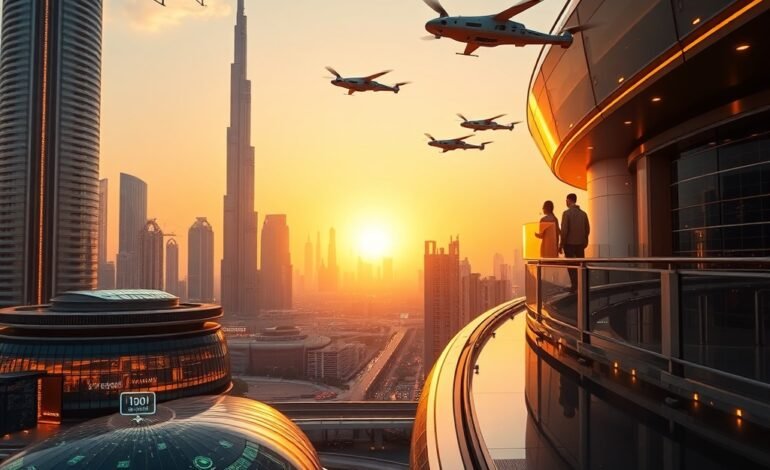

Dubai’s drive to outpace global benchmarks received a fresh boost on when His Highness Sheikh Hamdan bin Mohammed bin Rashid Al Maktoum, Crown Prince of Dubai, Deputy Prime Minister and Chairman of the Dubai 10X initiative, approved three new strategic projects. The approvals were announced at a high‑level coordination meeting of the Dubai Executive Council.
A Vision Anchored in “Being Ten Years Ahead”
Launched in 2021, Dubai 10X is the government’s flagship programme designed to place the emirate a decade ahead of its peers. The “challenge‑driven” model invites ministries and public‑sector entities to submit bold ideas, which are then vetted, funded and fast‑tracked by a dedicated execution unit. To date, the initiative has overseen more than 70 projects, ranging from autonomous transport pilots to AI‑enhanced public‑service platforms and large‑scale renewable‑energy deployments.
Sheikh Hamdan, a long‑time champion of Dubai 10X, has repeatedly stressed that the programme is about reshaping governance, industry and daily life, not merely adopting technology. “Our ambition is to create a living laboratory where ideas that would normally take a decade to materialise are realised in months,” he said in a recent address to the Dubai 10X Council.
The Newly Approved Projects: Scope and Strategic Fit
While the detailed dossiers remain confidential pending tendering, the Crown Prince’s endorsement signals clear strategic direction. All three projects align with Dubai 10X’s four pillar areas—smart government, sustainable infrastructure, advanced mobility and next‑generation health and education.
1. Smart‑Government Platform
The first project will overhaul Dubai’s digital public‑service architecture. Building on the “Smart Dubai” citizen portal, the new platform will integrate:
- Artificial‑intelligence analytics for predictive service delivery,
- Blockchain‑based identity verification, and
- A unified data‑exchange layer to cut processing times for licences, permits and welfare services by up to 70 percent.
The initiative supports the emirate’s “Paperless Government” target for 2028 and is expected to generate measurable cost savings for both the state and residents.
2. Zero‑Carbon Logistics Hub
The second undertaking focuses on a carbon‑neutral freight and logistics centre on Dubai’s outskirts. Key components include:
- Electric‑powered cargo handling equipment,
- Solar‑generated micro‑grids, and
- AI‑optimised routing to lower the carbon intensity of intra‑emirate freight movements by at least 40 percent.
The hub dovetails with the Dubai Clean Energy Strategy 2050, which aims for clean energy to supply 75 percent of total consumption.
3. Health‑Tech Research Cluster
The third project will establish a multidisciplinary R&D cluster dedicated to precision medicine, tele‑health and health‑data interoperability. It will bring together local universities, private‑sector innovators and international partners to accelerate commercialisation of AI‑driven diagnostic tools and personalised treatment pathways, reinforcing Dubai’s goal to become a regional hub for medical tourism and digital health by 2030.
Investment Outlook and Economic Impact
Collectively, the three projects are projected to require an investment envelope of roughly AED 3 billion over the next five years, sourced from public funding, sovereign‑wealth allocations and private‑sector co‑investment. The Dubai Economic Department estimates an economic multiplier of 2.5 times the initial outlay, indicating high‑value job creation, ancillary industry growth and enhanced attraction of global talent.
Implications for the Broader Ecosystem
The swift approval reflects a broader UAE governance shift toward outcome‑oriented, cross‑sector collaboration. By channeling resources through Dubai 10X’s streamlined pipeline, the emirate can bypass traditional bureaucratic delays that often hinder large‑scale innovation programmes.
Specific implications include:
- Supply‑chain dynamics: The carbon‑neutral logistics hub could reshape regional trade corridors, especially as China’s Belt and Road Initiative intersects with Middle‑East routes.
- Medical self‑reliance: The health‑tech cluster aims to localise advanced medical technologies, reducing reliance on imported equipment—a strategic advantage highlighted during the COVID‑19 pandemic.
- Investment climate: The projects signal to global venture capital and sovereign‑wealth funds that Dubai remains fertile ground for high‑impact, technology‑driven ventures.
Looking Ahead
Following the Crown Prince’s endorsement, the next phases will involve detailed feasibility studies, stakeholder workshops and competitive procurement processes. These steps will be closely watched by local enterprises and international observers alike.
If the projects deliver on projected efficiencies and environmental gains, Dubai could set a new benchmark for how cities translate strategic vision into tangible outcomes—demonstrating a governance model where visionary leadership, data‑driven policy and rapid execution converge to shape the metropolis of tomorrow.