




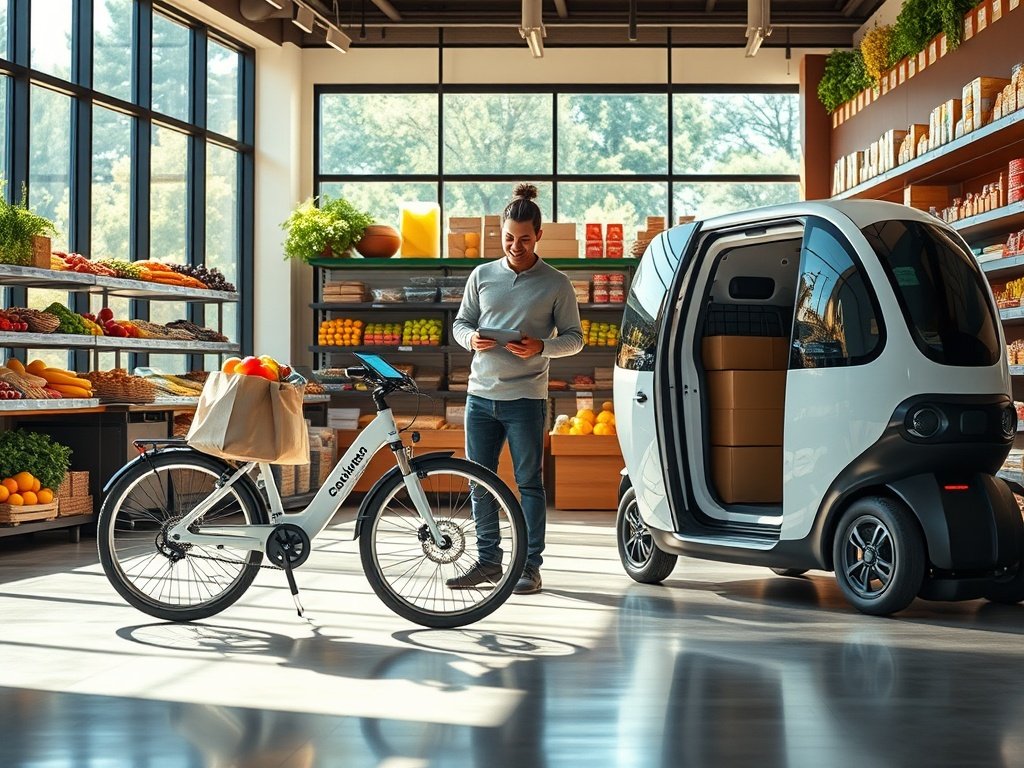
– Amazon announced Tuesday that it will close the handful of physical stores operating under the Go and Fresh banners, redirecting resources to Whole Foods Market and its rapidly expanding same‑day grocery delivery network.
From “checkout‑free” labs to a wholesale pivot
The Go and Fresh concepts, launched in 2020, were designed as living laboratories for checkout‑free technology. Shoppers could walk out without a cash register; sensors, computer vision and AI linked purchases directly to their Amazon accounts.
“Go and Fresh showed what was technologically possible, but not what was viable economically,” said Zak Stambor, senior analyst at eMarketer, commenting on the closure.
The economics of scale: Whole Foods as the backbone
Since acquiring Whole Foods for $13.7 billion in 2017, Amazon has added more than 550 stores—a 40 percent sales increase—making the chain one of the three largest grocery retailers in the United States. Whole Foods now serves as both a sales channel and a network of micro‑fulfillment hubs.
- 550+ stores nationwide
- 40 % sales growth since 2017
- Integrated supply chain and brand trust in premium foods
A delivery engine that is accelerating
Amazon’s combined same‑day grocery service (Amazon Fresh and Prime Now) recorded a 40‑fold sales increase over the past twelve months. The company is piloting an ultra‑fast model promising 30‑minute delivery of perishables in limited markets.
Colin Sebastian, senior research analyst at Baird Equity, noted that the shift “likely benefits the logistics flywheel” Amazon has refined for years.
What the closures mean for the retail landscape
Industry observers estimate fewer than two dozen Go and Fresh locations will close, primarily in major metros. Some sites may be converted into traditional Whole Foods stores, easing disruption for staff and shoppers.
Competitors such as Kroger and Albertsons have already invested heavily in click‑and‑collect, automated fulfillment and third‑party delivery partnerships, underscoring the growing importance of blended physical‑digital grocery channels.
The broader strategic calculus
Amazon’s move aligns with a recent pattern of portfolio rationalization, pruning ventures that fall short of profitability thresholds. Grocery remains a key growth frontier: U.S. food spending exceeds $1.6 trillion annually, with online penetration rising swiftly.
Looking ahead: the promise of a “supercenter” model
In the same corporate blog post, Amazon hinted at a future “retail supercenter” that would combine grocery, household essentials and general merchandise under one roof, leveraging checkout‑free tech and serving as a fulfillment node.
The concept mirrors Walmart’s “Store No. 8” labs, which blend physical and digital experiences to drive traffic and efficiency.
Conclusion
Closing the Go and Fresh experiments does not signal a retreat from brick‑and‑mortar grocery. Instead, Amazon is consolidating around Whole Foods—now a network of over 550 locations—and an ultra‑fast delivery operation that could reshape U.S. grocery competition.
Analysts expect the shift to cement Amazon among the nation’s top three grocery retailers while pressuring legacy supermarkets to accelerate their own omnichannel strategies.
Sources: Amazon corporate blog (Feb 2024), eMarketer, Baird Equity Research, industry reports.