Europe Ramps Up Arctic Strategy as U.S. Greenland Ambitions Resurface

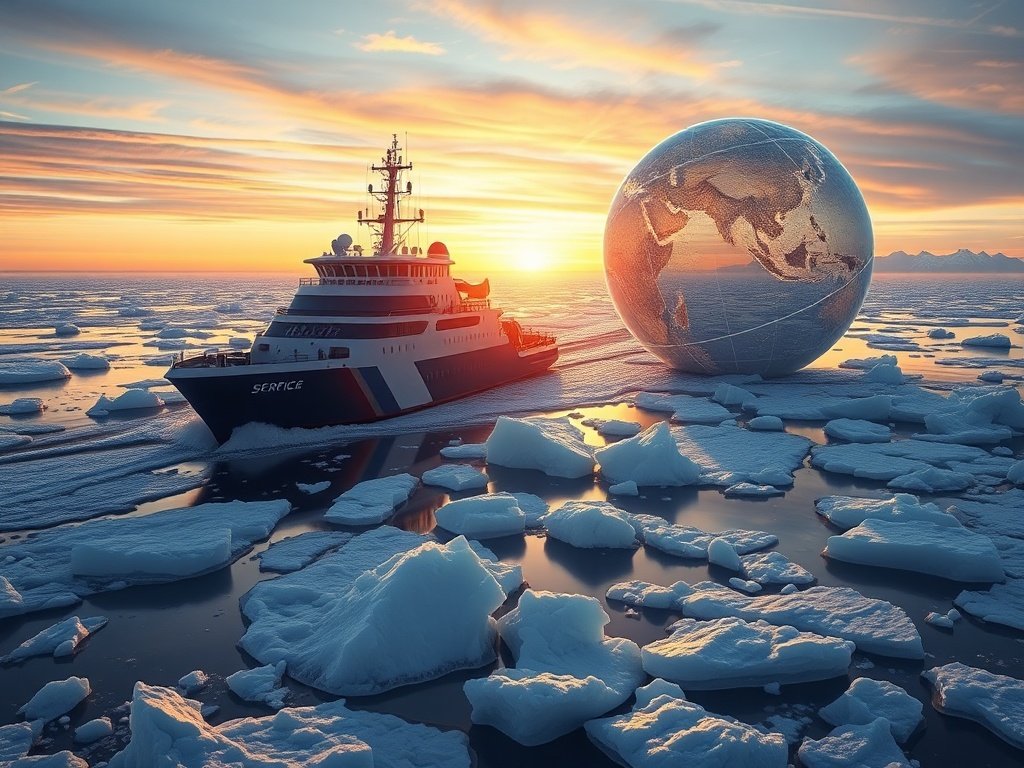
Hamburg, 27 January 2026 – German Chancellor Friedrich Merz announced at the close of the North Sea Summit that the European Union will sharpen its focus on safeguarding the Arctic, a move framed as a direct response to renewed U.S. interest in Greenland.
A New Chapter in Arctic Diplomacy
Ministers and industry leaders from the EU’s maritime nations adopted a joint statement pledging “solidarity” to Denmark and Greenland. Merz warned that “the Arctic is not a peripheral theater; it is central to Europe’s future energy, trade, and climate agenda,” and vowed to “redouble our diplomatic, scientific, and, where necessary, security efforts” (EU, 2026).
The U.S. Factor: From Troop Surge to Strategic Retrenchment
Merz cited “unprecedented attempts by President Donald Trump to annex Greenland” as the catalyst for Europe’s renewed resolve. Although the United States withdrew most of its military presence in the early 2020s, two bases—Thule Air Base and a logistics hub near Kangerlussuaq—remain operational, giving Washington a foothold for Arctic surveillance and missile defence.
Dr. Lena Hoffmann of the European Institute for Security Studies noted that the Trump administration’s rhetoric signals a broader shift toward a more assertive U.S. Arctic posture, driven by competition with China, new shipping lanes, and untapped resources.
Denmark and Greenland: Partners in a Shared Defense Vision
Denmark’s Prime Minister Mette Frederiksen echoed Merz’s call for unity, stressing a “more self‑confident, competitive, and independent European stance.” She highlighted existing EU‑Denmark collaborations on climate research, fisheries management, and renewable‑energy projects, especially Greenland’s emerging green‑hydrogen sector.
Geopolitical Stakes: Why the Arctic Matters More Than Ever
The Arctic holds up to 13 percent of undiscovered oil and 30 percent of natural gas, while melting ice is opening the Northwest Passage and the Northern Sea Route for commercial shipping within the next decade. Non‑Arctic powers, notably China, have declared themselves “near‑Arctic states” and are investing in ports and mining concessions.
For the EU—responsible for roughly 30 percent of global maritime trade—the security of these routes is integral to economic resilience and to the EU Green Deal’s climate objectives.
Toward a Coordinated European Arctic Policy
The EU plans to finalize an Arctic Action Plan by mid‑2026. The draft proposes:
- Increased funding for joint scientific missions, including ice‑breaker expeditions and satellite monitoring.
- A unified maritime surveillance framework leveraging EU satellite assets and NATO’s Arctic Command.
- Strengthened legal mechanisms to enforce UNCLOS in disputed waters.
- Economic incentives for green technologies in Greenland—hydrogen production, wind farms, carbon‑capture.
- Expanded diplomatic outreach to Indigenous communities to respect traditional rights and knowledge.
Germany will contribute additional naval assets to the EU’s Arctic task force, while Denmark will host a new joint research facility in Nuuk focused on climate resilience and sustainable extraction.
The Road Ahead: Balancing Cooperation and Competition
Professor Erik Sørensen of the Copenhagen School of International Relations cautioned that Europe must remain a reliable NATO partner while safeguarding strategic autonomy. A credible, integrated Arctic policy could deter unilateral actions and position the EU as a key arbitrator in the High North.
Conclusion
The Hamburg declaration marks a pivotal moment for European Arctic policy. By pledging solidarity with Denmark and Greenland and outlining a multi‑layered approach that blends diplomacy, research, and security, Europe signals its intent to become a decisive actor in a region that is both a frontier of opportunity and a sentinel of planetary health.